
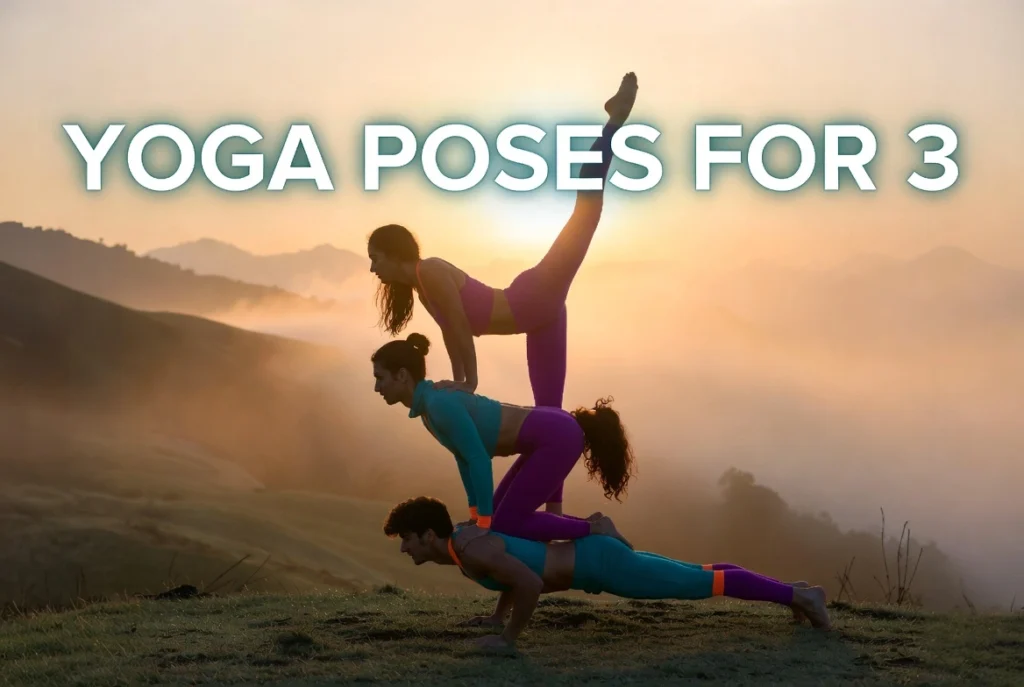
Yoga Poses for 3: 25+ Easy to Advanced Trio Yoga Moves
Introduction
Yoga Poses For 3 are rapidly emerging as one of the most engaging and dynamic fitness movements in 2026. People are no longer limiting themselves to solo routines—they are now embracing collaborative wellness experiences that strengthen the body while deepening human connection.
Whether you’re practicing at home, in a garden, or inside a professional yoga studio, 3 person yoga poses introduce an entirely new dimension of excitement, coordination, and shared energy. Instead of focusing solely on individual performance, participants must align with two partners, creating a synchronized flow that enhances both physical and mental awareness.
Unlike conventional yoga, trio yoga integrates multiple fitness elements into one unified practice:
- Balance and stability
- Muscular strength
- Flexibility and mobility
- Trust and communication
This comprehensive guide is designed to be the ultimate pillar article on yoga poses for 3. It covers everything—from beginner-friendly movements to advanced acro formations, along with safety protocols, structured routines, breathing techniques, and expert-level insights—all explained in simple, easy-to-understand language.
What Are Yoga Poses for 3?
Yoga Poses For 3, also referred to as trio yoga or three-person yoga, involve three individuals performing synchronized postures together. These poses require coordination, timing, and mutual support.
Each participant plays a specific role:
Trio Yoga Roles
| Role | Responsibility | Skills Required |
| Base | Provides foundation and support | Strength, stability |
| Flyer | Performs elevated movements | Balance, flexibility |
| Spotter | Ensures safety and guidance | Awareness, quick reflexes |
You can think of trio yoga as a fusion of:
- Traditional yoga
- Partner yoga
- Acro yoga
This blend makes it both physically challenging and socially engaging.
Benefits of 3 Person Yoga
Mental Benefits
- Enhances concentration and focus
- Reduces anxiety and mental fatigue
- Increases mindfulness and awareness
- Promotes relaxation and clarity
Physical Benefits
- Strengthens core muscles
- Improves joint mobility and flexibility
- Enhances posture and alignment
- Builds muscular endurance
Emotional Benefits
- Develops trust between participants
- Strengthens relationships and bonding
- Boosts self-confidence
- Encourages teamwork and communication
Why it works: When practicing with others, your nervous system adapts to coordination, making your brain and body function more efficiently.
Safety Tips Before You Start
Before attempting any yoga poses for 3, it is essential to follow these safety guidelines:
Warm up for at least 10–15 minutes
Use a soft surface such as a yoga mat
Communicate clearly with partners
Begin with basic poses before advancing
Always assign a spotter for safety
Pro Tip: Most injuries occur due to negligence. Following these precautions already puts you ahead of the majority of beginners.
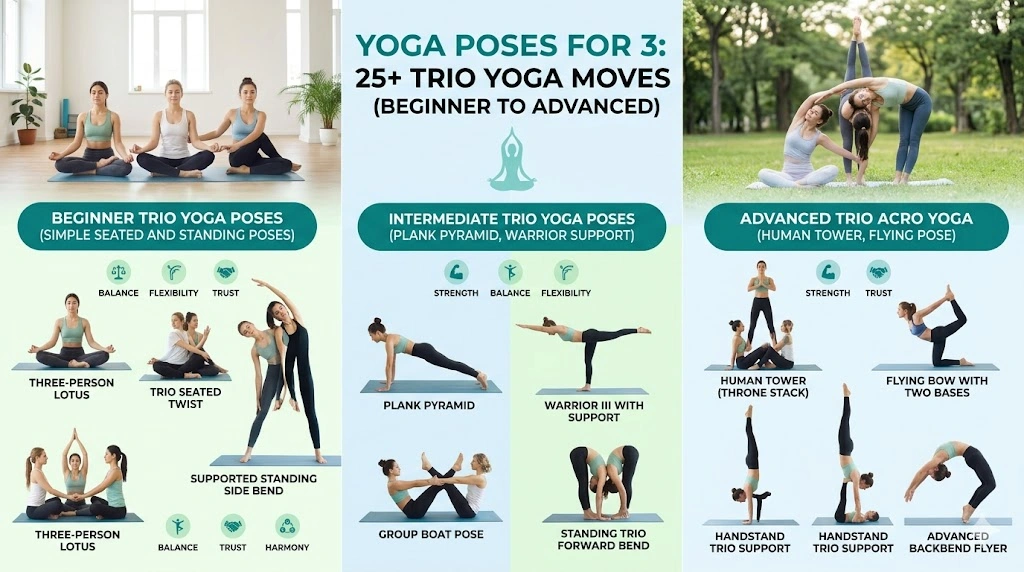
Beginner Yoga Poses for 3
These introductory poses are simple, safe, and ideal for newcomers.
1. Triple Seated Forward Fold
Steps:
- Sit in a straight formation
- Hold each other’s shoulders or hands
- Slowly bend forward in unison
Targets: Hamstrings, lower back
Breathing: Inhale upward, exhale while bending
2. Triple Child’s Pose Circle
Steps:
- Sit in a circular arrangement
- Lean forward toward the center
- Rest your forehead gently
Excellent for relaxation and calming the mind
3. Three-Way Tree Pose
Steps:
- Stand in a triangular shape
- Hold hands for support
- Lift one leg into tree position
Improves balance, coordination, and stability
4. Triple Downward Dog
Steps:
- One person starts in downward dog
- Second aligns above them
- Third joins to complete the structure
Strengthens shoulders, arms, and core
5. Seated Twist Circle
Steps:
- Sit cross-legged in a circle
- Twist your torso toward one another
- Hold the position
Enhances spinal flexibility and mobility
Intermediate Yoga Poses for 3
These poses introduce moderate complexity and require better control.
6. 3-Person Plank Pyramid
Steps:
- One person holds a plank
- Second places legs on their back
- Third joins to form a pyramid
Builds core strength and endurance
7. Supported Warrior III
Steps:
- One partner balances forward
- Others provide arm support
Improves stability and posture
8. Reverse Star Pose
Steps:
- Stand in a triangular formation
- Extend arms outward
Encourages body alignment and openness
9. Seated Triangle Stack
Steps:
- Sit in layered formation
- Stretch sideways
Enhances flexibility and coordination
10. Bridge Support Pose
Steps:
- One person forms a bridge
- Others assist balance
Strengthens glutes and lower back
Advanced Yoga Poses for 3
These movements require strength, precision, and prior experience.
11. Triple Acro Pyramid
Steps:
- Base lies on the ground
- Second balances above
- Third climbs on top
Requires full-body control and trust
12. Flying Archer Pose
A dynamic aerial pose where the flyer is lifted and extended.
13. Triple Shoulder Stand
Maintain proper neck alignment to avoid injury
14. Trio Handstand Prep
Use wall support while building confidence
15. Human Tower Balance
One of the most challenging and visually impressive poses
10-Minute Trio Yoga Routine
| Phase | Time | Activity |
| Warm-up | 3 min | Light stretches |
| Main Flow | 5 min | Tree, Downward Dog, Plank |
| Cool Down | 2 min | Child’s Pose |
Ideal for individuals with limited time
Proper Form & Alignment Tips
Maintaining correct posture is crucial:
- Keep your spine neutral and aligned
- Engage your core muscles
- Avoid locking your joints
- Maintain visual contact with partners
Proper form minimizes injury risk
Breathing Techniques
Breathing plays a vital role in synchronization:
- Inhale during expansion
- Exhale during contraction
- Coordinate breathing with partners
Harmonized breathing enhances performance
Muscles Targeted
Trio Yoga activates multiple muscle groups:
- Core muscles (abs)
- Arms and shoulders
- Legs and glutes
- Back muscles
Variations
| Level | Type |
| Beginner | Static poses |
| Intermediate | Balance-focused |
| Advanced | Acro-based |
Common Mistakes to Avoid
Lack of communication
Skipping warm-up
Poor alignment
Choosing incompatible partners
Who Should Avoid Trio Yoga?
- Individuals with injuries
- Beginners without supervision
- People with balance disorders
- Pregnant women (consult a doctor)
Science Behind Trio Yoga
Trio yoga enhances:
- Proprioception (body awareness)
- Neuromuscular coordination
- Oxytocin levels (bonding hormone)
This explains why group yoga is gaining global popularity
Diet Tips for Better Performance
- Stay hydrated
- Eat light before sessions
- Include protein-rich foods
- Add magnesium-rich nutrients
Home Practice Tips
- Use wall support for stability
- Ensure sufficient space
- Record sessions for improvement
Pros & Cons of Yoga Poses for 3
Pros
- Engaging and enjoyable
- Enhances teamwork
- Full-body workout
Cons
- Requires coordination
- Risk of imbalance
- Needs communication
FAQs
1. Is yoga for 3 beginners-friendly?
Yes, start with simple poses and proper guidance.
2. Do I need strength for trio yoga?
Basic strength is enough to begin.
3. Is trio yoga safe?
Yes, if you follow safety rules.
4. Can I practice at home?
Yes, with enough space.
5. What is the best trio yoga pose for beginners?
Triple Child’s Pose and Tree Pose.
Conclusion
Yoga Poses For 3 are not merely physical exercises—they represent a powerful combination of fitness, trust, and collaboration.
With consistent practice:
- You become stronger
- More flexible
- More confident
Start with foundational poses, follow proper safety guidelines, and gradually advance your skills.
