
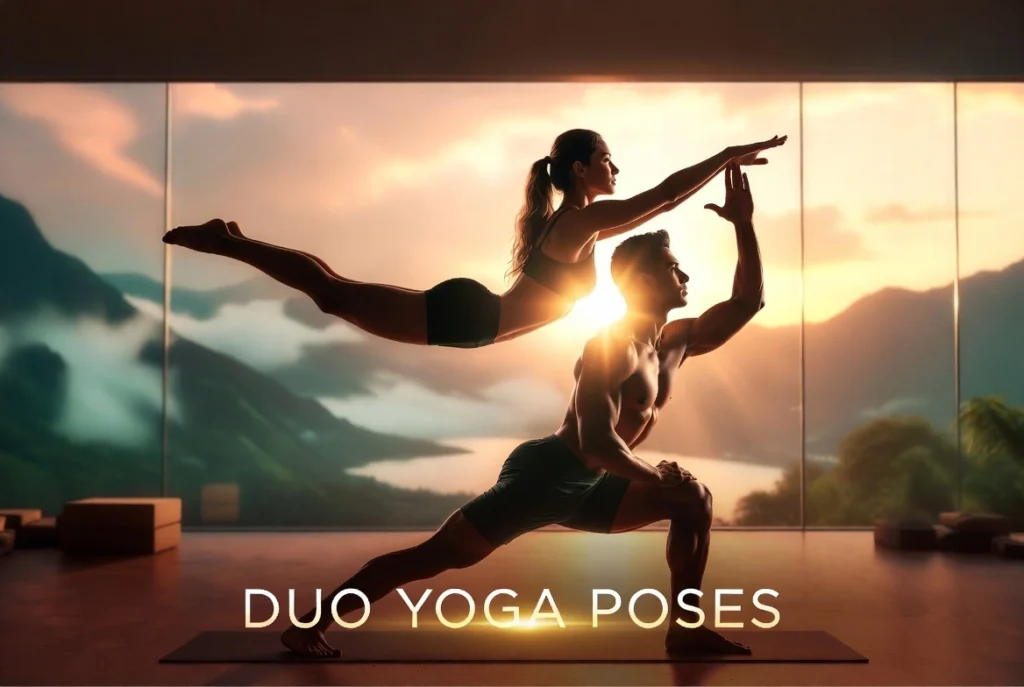
Duo Yoga Poses
Introduction: Why Duo Yoga Poses Are Transforming Modern Yoga Practice
Duo Yoga Poses—also known as partner yoga—are becoming one of the fastest-growing wellness practices across Europe. From Spain’s sunny beach retreats to Germany’s structured fitness studios, people are now choosing partner-based movement over solo workouts.
Unlike traditional yoga, duo yoga poses require two people working together. One partner supports the other, helping with balance, stretching, resistance, and alignment. This creates a shared experience that is both physical and emotional.
What makes this practice special is not just flexibility or strength. It is about trust, communication, and connection. When two people move together, they must listen to each other, breathe together, and adjust in real time.
In cities like London, Berlin, Paris, Rome, and Barcelona, duo yoga is now used in:
- Wellness retreats
- Couples therapy programs
- Fitness studios
- Mindfulness workshops
In this complete guide, you will learn everything about Duo Yoga Poses, including:
- Beginner to advanced poses
- Step-by-step instructions
- Safety rules
- Breathing techniques
- Full structured flows
- Benefits and science behind partner yoga
This article is designed in simple English so anyone—even beginners—can understand and start practicing safely.
What Are Duo Yoga Poses?
Duo Yoga Poses are yoga positions performed by two people together. One person usually acts as a base, while the other acts as a flyer or mover depending on the pose.
These poses combine:
- Balance
- Stretching
- Strength
- Resistance
- Coordination
Key Characteristics of Duo Yoga Poses
- Shared balance between two bodies
- Partner-assisted stretching
- Constant communication
- Synchronized breathing
- Mutual support and trust
How Duo Yoga Differs from Solo Yoga
| Feature | Solo Yoga | Duo Yoga Poses |
| Balance | Individual control | Shared control |
| Stretching | Self-assisted | Partner-assisted |
| Communication | Internal focus | External communication |
| Difficulty | Personal progress | Depends on partner |
| Experience | Individual journey | Shared journey |
Benefits of Duo Yoga Poses
Duo Yoga Poses are not just physical exercises. They work on the body, mind, and emotional connection.
1. Physical Benefits
Practicing Duo Yoga Poses improves:
- Flexibility in hips and hamstrings
- Core muscle strength
- Spine alignment and posture
- Shoulder and arm stability
- Joint mobility
Over time, your body becomes more balanced and controlled.
2. Mental & Emotional Benefits
This is where Duo Yoga becomes powerful:
- Reduces stress and anxiety
- Builds emotional trust
- Improves focus and awareness
- Helps calm the nervous system
- Encourages mindfulness
3. Social & Communication Benefits
Because you work with a partner:
- You improve communication skills
- You learn patience and teamwork
- You build stronger relationships
- You develop non-verbal understanding
4. European Wellness Trend Insight
Across Europe:
- Spain & Italy → Focus on wellness retreats and mindful tourism
- Germany & Scandinavia → Used in rehabilitation and functional fitness
- UK & France → Popular in urban yoga studios and couples classes
This shows that Duo Yoga Poses are becoming a global wellness trend.
Step-by-Step Guide: How to Practice Duo Yoga Poses Safely
Before starting, remember: safety is more important than difficulty.
Warm-Up Together
Always start with light movement:
- Neck rotations
- Shoulder rolls
- Hip circles
- Gentle forward bends
- 3–5 minutes of breathing together
Set Communication Rules
Before starting poses:
- Agree on safety words like “stop” or “slow”
- Maintain eye contact when needed
- Speak during movement
- Never force a position
Start with Beginner Duo Yoga Poses
Begin with simple poses:
- Back-to-back breathing
- Seated forward stretch
- Gentle assisted stretching
Progress Slowly
Move to:
- Balance poses
- Resistance poses
- Light strength poses
Avoid jumping into advanced acro yoga too early.
Proper Form & Alignment Principles
To avoid injury:
- Keep spine neutral unless stretching
- Engage core muscles
- Avoid locking knees
- Keep movements slow
- Maintain soft breathing
Good alignment is the foundation of safe Duo Yoga Poses.
Breathing Technique in Duo Yoga Poses
Breathing is the heart of Partner Yoga.
Simple Breathing Pattern
- Inhale together (4 seconds)
- Hold (1–2 seconds)
- Exhale together (6 seconds)
Benefits
- Improves synchronization
- Reduces instability
- Increases relaxation
- Builds emotional connection
Muscles Targeted in Duo Yoga Poses
| Muscle Group | Activation Level | Example Poses |
| Core muscles | High | Boat pose, plank variations |
| Hamstrings | Medium-High | Forward folds |
| Spine muscles | Medium | Backbend support |
| Shoulders | High | Downward dog variations |
| Hip flexors | High | Seated lifts |
Types of Duo Yoga Poses (Beginner to Advanced)
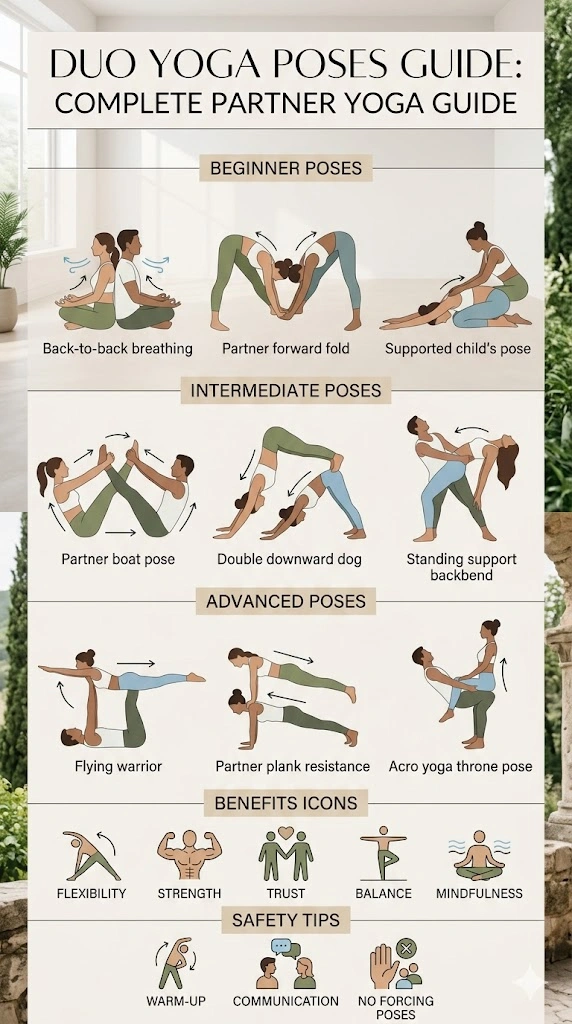
Beginner Duo Yoga Poses
1. Back-to-Back Breathing
- Sit back-to-back
- Close eyes
- Match breathing rhythm
2. Partner Forward Fold
- Sit facing each other
- Hold hands
- Alternate stretching forward
3. Supported Child’s Pose
- One partner rests
- Other gives gentle back pressure
Intermediate Duo Yoga Poses
4. Double Downward Dog Support
- One partner forms downward dog
- Other places feet gently on back
5. Partner Boat Pose
- Sit facing each other
- Hold Handsh
- Lift legs together
6. Standing Backbend Support
- One partner supports spine
- Other leans into backbend
Advanced Duo Yoga Poses
7. Flying Warrior Pose
- One partner lifts the other
- Requires full balance control
8. Partner Plank Resistance
- One holds plank
- Other applies controlled pressure
9. Acro Yoga Throne Pose
- Base supports seated partner on legs
- Requires strong core stability
Structured Duo Yoga Flow Routine (15–30 Minutes)
| Phase | Duration | Activity |
| Warm-up | 5 min | Breathing + mobility |
| Beginner flow | 5 min | Supported poses |
| Strength phase | 10 min | Plank + boat |
| Balance phase | 5–10 min | Advanced poses |
| Cooldown | 5 min | Relaxation |
Pros and Cons of Duo Yoga Poses
Pros
- Builds trust and connection
- Improves flexibility faster
- Fun and engaging
- Strengthens core muscles
Cons
- Needs coordination
- Risk of imbalance
- Not ideal for solo practice
- Requires patience
Common Mistakes to Avoid
- Holding Breath
- Skipping warm-up
- Forcing deep stretches
- Poor communication
- Trying advanced poses too early
Safety Tips for Duo Yoga Practice
- Use soft mats or grass
- Move slowly
- Stop if pain occurs
- Keep equal weight distribution
- Practice in safe space
Who Should Be Careful (Contraindications)
Modify or avoid if:
- Recent injuries
- Joint problems
- Severe back pain
- Post-surgery recovery
- Pregnancy (advanced poses only)
Tips for Beginners
- Start with trusted partner
- Focus on breathing first
- Keep sessions short
- Practice regularly
- Do not rush progress
Duration & Frequency Recommendations
- Beginners: 2–3 times/week (20 min)
- Intermediate: 3–4 times/week (30 min)
- Advanced: 4–5 times/week (30–60 min)
Yoga Philosophy Behind Duo Yoga Poses
Duo Yoga Poses are based on the idea of connection and unity.
In yoga philosophy, balance is not only internal—it is also relational. When two people move together:
- They build trust
- They develop awareness
- They share energy
- They improve mindfulness
This is why duo yoga feels more emotional than solo yoga.
Country-Wise European Comparison
| Country | Popularity | Focus Style |
| Spain | High | Retreat wellness tourism |
| Germany | High | Therapy & fitness |
| Italy | Medium-High | Relaxation & lifestyle |
| UK | High | Urban yoga studios |
| France | Medium | Holistic wellness |
FAQs
1. Are duo yoga poses suitable for beginners?
Yes, beginners can start with simple breathing and stretching poses.
2. Do I need to be flexible for duo yoga?
No, flexibility improves with practice over time.
3. Can couples practice duo yoga at home?
Yes, it can be safely practiced at home with communication.
4. How often should I practice duo yoga?
2–4 times per week is ideal.
5. Is duo yoga safe for all ages?
Yes, but modifications are needed for older adults or injuries.
Conclusion
Duo Yoga Poses are more than physical exercises—they are a complete system of connection, mindfulness, and strength-building.
From Europe’s wellness retreats to home practices, this form of yoga is becoming a powerful tool for improving both body and mind.
By practicing consistently, you will develop:
- Stronger body control
- Better communication
- Deep emotional awareness
- Improved flexibility and balance
Start slow, stay consistent, and let your practice grow naturally.
