
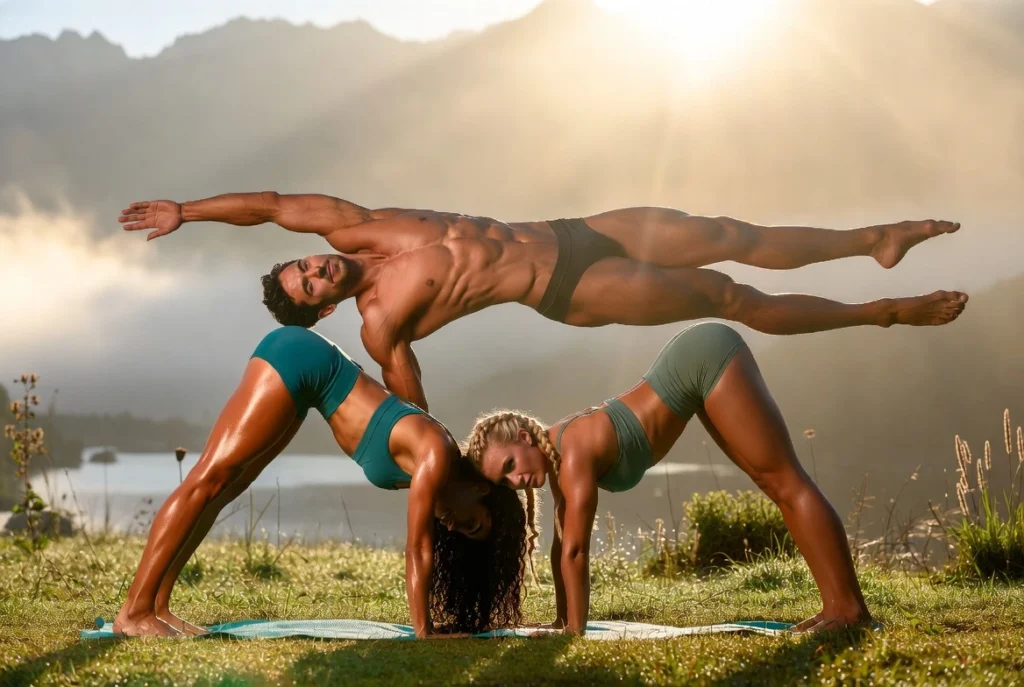
Ultimate Guide to 3 Person Yoga Poses
Introduction — Understanding 3 Person Yoga
3 Person Yoga Poses, commonly referred to as trio yoga, are yoga sequences performed collaboratively by three participants. Unlike traditional solo yoga or partner yoga for two, trio yoga introduces complex dynamics of alignment, coordination, and mutual trust. In this practice, each individual’s movement and stability affect the others, making communication, balance, and precision critical.p
Trio yoga is practiced in yoga studios, wellness retreats, and fitness classes, and is increasingly shared on social media platforms for inspiration and instruction. When three individuals synchronize their strength and flexibility, it fosters enhanced physical stability, heightened concentration, and deeper interpersonal trust.
What Are 3 Person Yoga Poses?
3 Person Yoga Poses involve three practitioners collaborating to create balanced shapes, holds, or dynamic movements. They may be static (sustained postures) or dynamic (fluid transitions). Success in trio yoga depends on three core skills:
- Clear Communication – verbal and non-verbal cues ensure synchronized movements
- Balance and Core Stability – a strong core stabilizes each participant and enhances safety
- Mutual Trust and Timing – poses often require coordinated timing and confidence in teammates
By practicing trio yoga, you not only improve physical abilities but also strengthen social cohesion, focus, and teamwork skills.
Physical, Mental, and Social Benefits of Trio Yoga
Physical Benefits:
- Enhances core stability and overall balance
- Increases flexibility in the hips, shoulders, back, and hamstrings
- Strengthens stabilizer muscles and joint integrity
- Improves body awareness and postural alignment
Emotional & Social Benefits:
- Promotes trust and effective communication
- Encourages team bonding and social engagement
- Fosters motivation, cooperation, and shared achievement
Mind-Body Benefits:
- Deepens mindfulness and focus
- Synchronizes breathing and energy awareness
- Improves concentration, patience, and presence
In essence, trio yoga is more than just exercise — it’s a collaborative experience that nurtures both physical strength and interpersonal harmony.
Preparation & Warm-Up for Trio Yoga
Before attempting trio yoga poses, a thorough warm-up is essential to prevent injuries and optimize performance.
Suggested Warm-Up Sequence (10–15 Minutes)
| Warm-Up Movement | Purpose |
| Joint Circles (neck, wrists, ankles) | Lubricates joints and enhances mobility |
| Hip Openers (lunges, butterfly stretch) | Prepares hip flexors and glutes for posture |
| Spinal Movements (cat-cow, gentle twists) | Promotes spinal flexibility and alignment |
| Core Activation (planks, bird-dog) | Engages core for stability during lifts and balances |
This preparatory routine enhances flexibility, balance, and coordination among all participants.
Essential Safety Protocols:
✔ Establish clear movement signals before starting
✔ Assign a spotter for advanced or elevated poses
✔ Practice on non-slip yoga mats or cushioned surfaces
✔ Breathe slowly and remain mindful of alignment
Beginner 3 Person Yoga Poses
These poses are ideal for newcomers to trio yoga. They focus on team coordination, flexibility, and trust.
1. Triple Seated Forward Fold
Instructions:
- Sit in a straight line on yoga mats
- Extend legs forward, touching heels
- Hold each other’s elbows for stability
- Inhale to lengthen the spine, exhale, folding gently
Benefits:
- Hamstring and calf stretch
- Spine elongation
- Reduces stress and calms the nervous system
Muscles Targeted:
Hamstrings, calves, spinal extensors
Breathing:
Slow nasal inhale, gentle exhale
2. Triple Child’s Pose Circle
Instructions:
- Sit back on heels, forming a semicircle
- Link hands in the center
- Fold forward, resting heads near each other
Benefits:
- Opens hips and relieves tension in the lower back
- Strengthens group coordination
- Encourages relaxation and mindfulness
Breathing:
Deep diaphragmatic breaths
3. Three-Way Tree Pose
Instructions:
- Stand in a triangular arrangement
- Lift one foot to the inner leg of the opposite partner
- Bring palms together in the center of the chest
Benefits:
- Enhances ankle stability and balance
- Improves focus and concentration
- Builds team synchrony
Intermediate 3 Person Yoga Poses
Intermediate Trio Yoga poses require more core strength, focus, and teamwork.
4. 3-Person Plank Pyramid
Instructions:
- Two participants hold planks side by side
- The third participant places their hands between them
- Carefully step your feet onto your partner’s backs
- Align breath and maintain core tension
Benefits:
- Strengthens core and upper body
- Improves coordination and balance
- Challenges with shoulder and arm endurance
Safety Tip: Keep foot placement close and lift only where comfortable
5. Downward Dog Pyramid
Instructions:
- Two participants form a downward dog
- The third participant climbs gradually, placing toes on the backs
- Synchronize slow and controlled breathing
Benefits:
- Full-body strength and shoulder stretch
- Enhances proprioception and neural activation
Advanced 3 Person Yoga Poses
These poses require high-level strength, balance, and trust. Always use a spotter.
6. Triple Acro Pyramid
Instructions:
- Two base partners hold downward dog
- The third participant climbs onto the extended legs
- Hold 3–5 breaths
Safety:
Master plank pyramids before attempting
7. Flying Side Plank Trio
Instructions:
- Bases hold side planks facing opposite directions
- The third participant lies across their torsos
- Coordinate breath for balance and stability
Benefits:
- Strengthens obliques and core
- Enhances balance and symmetry
- Develops team trust
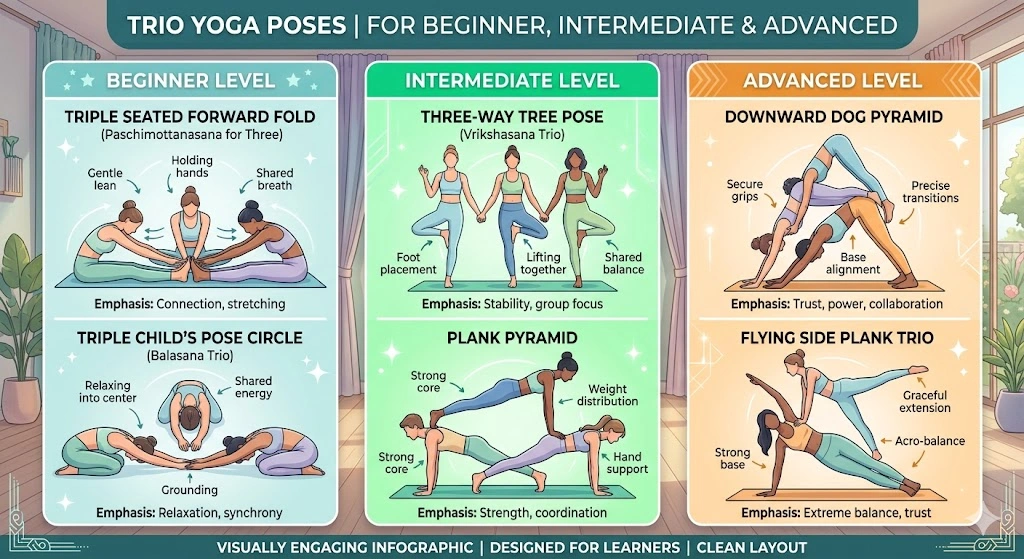
Step-by-Step Guide: Downward Dog Pyramid
Base Partners (A & B):
- Place palms firmly under your shoulders
- Lift hips gently toward the ceiling
- Keep heels moving toward the mat
Partner C:
- Place one foot lightly on B’s lower back
- Place the second foot carefully beside the first
- Maintain slow, controlled breaths
- Hold for 3 breaths and exit gently
Tips:
✔ Keep shoulders stable
✔ Avoid overextending hips
✔ Always use a spotter for lifted positions
Common Mistakes in Trio Yoga
- Attempting advanced poses prematurely
- Poor Postural alignment
- Skipping essential warm-ups
- Uncoordinated or irregular breathing
- Lack of spotters during lifts
Safety Guidelines
- Always warm up before poses
- Use non-slip mats
- Practice on soft floors or grass
- Stop immediately if you feel pain
- Employ trained spotters for high-risk movements
Pose Variations by Skill Level
| Pose | Beginner | Intermediate | Advanced |
| Seated Forward Fold | ✔ | — | — |
| Child’s Pose Circle | ✔ | — | — |
| Tree Formation | ✔ | ✔ | — |
| Plank Pyramid | — | ✔ | ✔ |
| Downward Dog Pyramid | — | ✔ | ✔ |
| Acro Pyramid | — | — | ✔ |
Breathing Techniques for Trio Yoga
- Ujjayi Breath: Smooth, audible; calms the nervous system
- Equal Breath: Inhale = Exhale; enhances focus
- Deep Belly Breath: Promotes relaxation and tension release
Muscles Targeted in Trio Yoga
- Core stabilizers
- Shoulder girdle and upper back
- Lower back muscles
- Hip flexors and extensors
- Balance muscles (ankles, glutes, calves)
Philosophical Perspective
Trio Yoga embodies concepts from yoga philosophy:
- Sangha (Community): Practicing together fosters unity and support
- Ahimsa (Non-Harm): Awareness of teammates’ safety and comfort
Practicing in teams deepens compassion, mindfulness, and empathy.
Suggested Practice Schedule
- Beginner: 2–3 sessions/week
- Intermediate: 3–4 sessions/week
- Advanced: 4–5 sessions/week
Include rest days to allow recovery and prevent overuse injuries.
FAQs
Q1. Can beginners safely practice 3 person yoga poses?
Yes — start with simple seated or balance poses, and always warm up first.
Q2. What are the top benefits of 3 person yoga?
Core strength, balance, flexibility, teamwork, and social bonding.
Q3. Do trio yoga poses help with flexibility?
Yes — especially for hips, spine, and shoulders.
Q4. How often should I train in trio yoga?
Begin with 2–3 times weekly, increasing frequency as skill improves.
Q5. Are advanced poses risky?
Only if attempted without a warm-up or spotters. Proper preparation minimizes risk.
Conclusion
3 Person Yoga Poses offer powerful physical, mental, and social benefits. By progressing gradually from beginner to advanced sequences, focusing on breath, alignment, and teamwork, you can create a safe and rewarding trio yoga practice.Whether practicing with friends, in classes, or at retreats, trio yoga builds strength, flexibility, trust, and camaraderie, making it a unique and fun approach to group fitness and mindfulness.
