
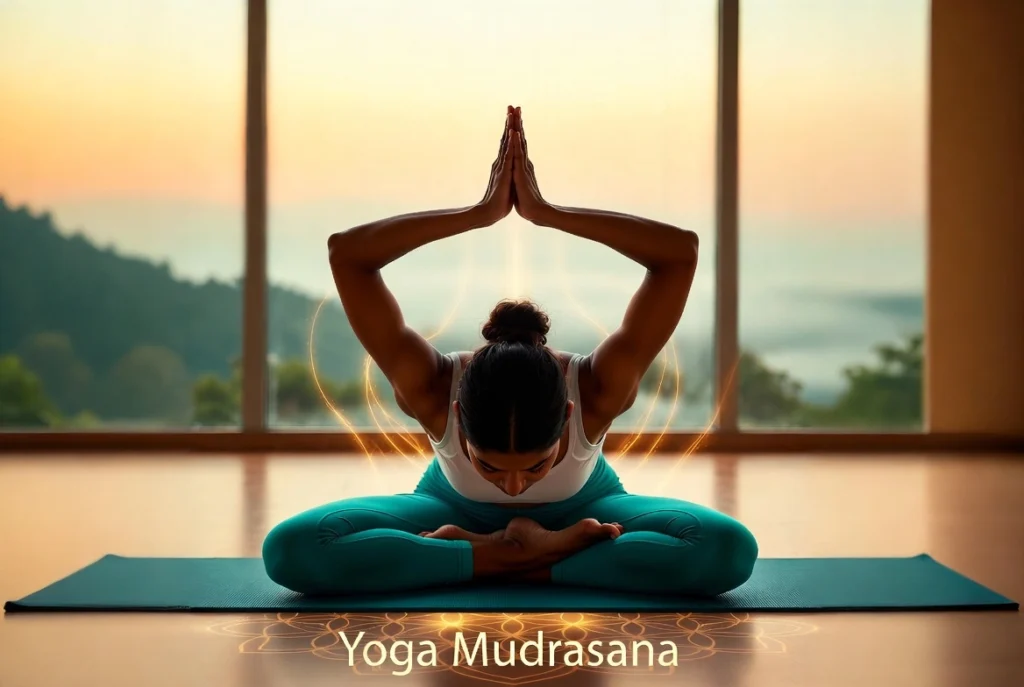
Yoga Mudrasana
Introduction: What Is Yoga Mudrasana?
The Yoga Mudrasana, also known as the Psychic Union Pose, is one of the deep-seated forward-bending poses of the ancient yoga traditions. This position is a perfect amalgamation of flexibility, physical strength, and conscious presence, which provides a syntactic experience to the mind, body, and subtle energy systems. Practitioners report a substantial improvement in the spinal mobility, posture balance, core strength, digestive system, and emotional stabilization with systematic practice.
In Europe, Portugal, Spain, and Germany, as well as the United Kingdom, a vast number of yoga practitioners have embraced the use of the Yoga Mudrasana in their daily or weekly yoga sessions to enhance the physical and meditative practice of yoga. It is a complete manual that you can rely on to perform a safe Yoga Mudrasana procedure, learn about the physiological and psychological effects of it, learn its variations at different levels, prevent typical mistakes, and combine advanced techniques to achieve better energy circulation and concentration.
Understanding Yoga Mudrasana
Meaning & Origin
The nomenclature Yoga Mudrasana derives from three Sanskrit terms:
- Yoga = union, integration, or harmony
- Mudra = seal, gesture, or symbolic lock
- Asana = posture or physical position
Accordingly, Yoga Mudrasana directly translates to mean the pose that closes energy as well as binds the body and mind. It is a combination of physical position and meditation that is meant to bring about inner consciousness and external calm.
Rooted in classical Hatha Yoga, this posture is intended to:
- Facilitate a centered and calm mind
- Optimize the flow of Prana (life energy)
- Enhance sensory and proprioceptive awareness
According to historical yoga texts, mudras are energetic seals used to redirect and channel subtle energy in the body, which tends to intensify the meditative experience and increase its internal perception.
Why Practice Yoga Mudrasana?
The advantages of Yoga Mudrasana may be classified into three major areas, namely, physical, mental-emotional, and energetic.
Physical Benefits
When performed with proper alignment and awareness, Yoga Mudrasana contributes to:
- Enhanced spinal suppleness and postural integrity
- Strengthening of core, lower back, chest, and shoulder muscles
- Augmented hip, gluteal, and shoulder mobility
- Gentle massage of abdominal organs, supporting digestion and internal detoxification
As an example, common patient responses experienced by normal practitioners include relief of lower back rigidity, enhanced gastrointestinal functioning, and an enhanced and erect posture.
Mental & Emotional Benefits
Beyond physical improvements, this posture supports cognitive and emotional well-being:
- Reduces stress, tension, and anxiety
- Promotes concentrated attention and meditative calm
- Facilitates emotional regulation and balance
This is especially because this is more focused on controlled and rhythmic breathing, which is similar to the way of meditating and that causes a parasympathetic effect.
Energetic & Chakra Benefits
From a yogic perspective, Yoga Mudrasana particularly stimulates the Manipura Chakra (solar plexus), associated with:
- Personal power and confidence
- Vitality and energy regulation
- Digestive system efficiency
- A sense of groundedness and motivation
Practitioners who incorporate mindful intention and visualization often report a surge in internal energy and a deeper sense of inner alignment.
Step‑by‑Step Instructions – How to Do Yoga Mudrasana
Below is a systematic approach suitable for home or studio practice:
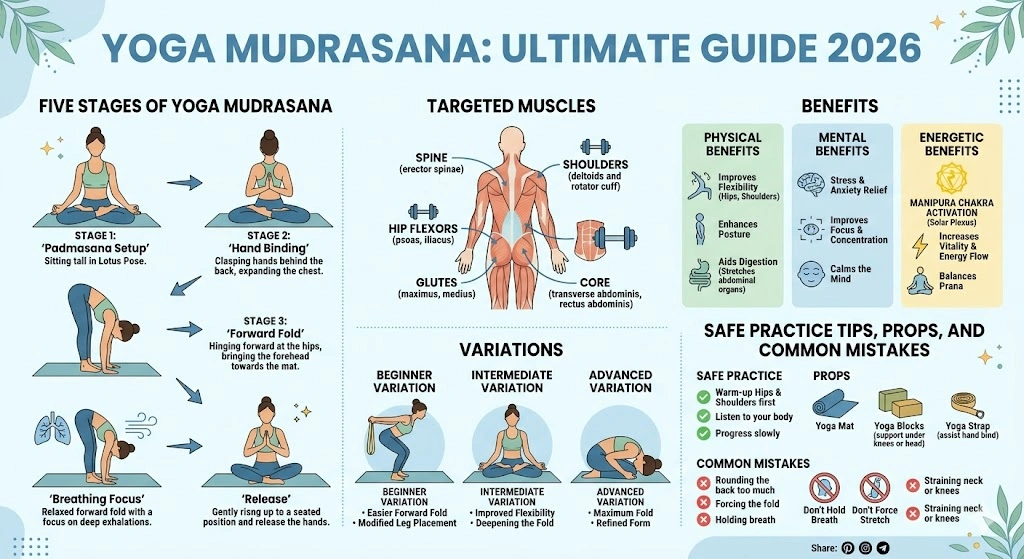
| Step | Action | Tips & Notes |
| 1 | Sit in Padmasana (Lotus Pose) | Maintain a tall spine; relax shoulders |
| 2 | Bind hands behind your back | Hold wrists or interlock fingers |
| 3 | Forward fold slowly | Exhale; hinge from hips, not low back |
| 4 | Hold & breathe | 1–3 minutes; focus on deep, steady inhalation and exhalation |
| 5 | Release gently | Inhale as you lift back up |
Detailed Instructions
Preparation – Sit in Padmasana
- Sit comfortably on your Yoga Mat with a straight spine.
- Cross your right foot onto the left thigh, then left foot onto the right thigh.
- Lift your chest and relax your shoulders.
- If hip tightness exists, place a cushion beneath your pelvis.
Tip: Maintain an elongated spine; avoid hunching or rounding your back.
Bind Hands Behind Your Back
- Extend both arms behind the lower back.
- Interlace fingers or grasp wrists.
- Advanced: gently clasp toes.
This binding action stretches the chest, shoulders, and upper back, enabling a deeper forward fold.
Forward Fold with Control
- Exhale and hinge from the hips; avoid compressing the lower spine.
- Gradually lower the torso and head toward your legs.
- Prioritize mindful control over depth.
Hold & Breathe
- Remain in the pose for 1–3 minutes or longer, depending on experience.
- Synchronize inhalations and exhalations through the nose.
- Focus on releasing tension and deepening awareness.
Release Slowly
- Inhale as you slowly lift your torso.
- Unbind hands carefully.
- Avoid abrupt movements; allow breath to guide the transition.
Proper Form & Alignment
Key Alignment Principles
To practice Yoga Mudrasana safely and effectively:
- Maintain a long, upright spine (avoid rounding)
- Hinge from the hip joints
- Relax the shoulders and upper back
- Keep the neck neutral
- Use props (blocks, straps, cushions) if necessary
Breathing Technique
Optimal breathing enhances the pose’s benefits:
- Inhale: Expand the chest and lower ribs
- Exhale: Deepen the forward bend
- Focus: Move in coordination with breath
Slow, mindful breathing improves flexibility, circulation, and relaxation.
Muscles Targeted
Yoga Mudrasana simultaneously stretches and strengthens key muscle groups:
- Spinal erectors and back muscles
- Shoulders, upper back, and chest
- Hip flexors and gluteal muscles
- Abdominal core muscles
The posture constitutes a full-body, internally focused stretch, promoting bodily awareness and energy alignment.
Variations for All Levels
Not all practitioners can execute the full Lotus Pose initially. Here are modifications:
Beginner Variations
- Ardha Padmasana (Half Lotus)
- Place a block under the forehead
- Use a yoga strap to assist with hand binding
Intermediate Variations
- Full Lotus Pose
- Cross elbows behind back
- Extend hold duration with controlled breathing
Advanced Variations
- Full Lotus + bind toes
- Hold for 2–5 minutes
- Incorporate meditative focus and energy visualization
Common Mistakes to Avoid
Even seasoned yogis make errors:
Rounding the spine instead of hinging at the hips
Forcing the posture beyond natural flexibility
Holding the breath instead of using rhythmic inhalation/exhalation
Neglecting preparatory stretches or warm-ups
Avoiding these mistakes prevents injury and maximizes benefits.
Safety Tips & Contraindications
Who Should Avoid This Pose?
Do not practice Yoga Mudrasana if you have:
- Severe knee or hip injuries
- Sciatica or chronic lower back conditions
- Hypertension or dizziness
- Recent spinal trauma
Consult a qualified healthcare professional if unsure.
Safe Practice Recommendations
- Warm up the hips, hamstrings, and back
- Use props such as blocks and straps
- Always practice on a non-slip yoga mat
Comfort should guide progress; safety is paramount.
Tips for Beginners
- Start with 15–30 second holds
- Prepare with hip openers like Baddha Konasana
- Prioritize breathing over depth
- Increase duration gradually
Patience fosters sustainable progress in flexibility and internal awareness.
Duration & Frequency
| Level | Hold Duration | Frequency |
| Beginner | 30–60 seconds | 3x per week |
| Intermediate | 1–3 minutes | 3–5x per week |
| Advanced | 4–10 minutes | 5x per week |
Consistency yields profound improvements in flexibility, strength, and inner calm.
Yoga Philosophy & Science Behind Yoga Mudrasana
Mudra Meaning in Yoga
Mudras are symbolic gestures that direct Prana within the subtle body. Yoga Mudrasana combines posture, breath, and focus, creating a unified practice for body-mind energy awareness.
Forward Folds and the Nervous System
Forward bends activate the parasympathetic nervous system, also known as the “rest-and-digest” state, reducing stress and improving digestion.
Breath, Mind & Body Unity
Breath following movement creates mind-body coherence which encourages calmness, clarity, and increase in energy flow.
Home Practice Suggestions
Begin with a preparatory sequence:
- Padmasana (Lotus Pose)
- Baddha Konasana (Bound Angle Pose)
- Paschimottanasana (Seated Forward Fold)
- Yoga Mudrasana
Follow with pranayama practices:
- Nadi Shodhana (Alternate Nostril Breathing)
- Kapalabhati (Cleansing Breath)
End with gentle stretches for relaxation.
FAQ — Yoga Mudrasana
A1: Not ideal for absolute beginners. Start with hip openers and half-lotus variations.
A2: Begin with 30–60 seconds and increase gradually.
A3: Yes. The abdominal compression and breathing help stimulate gut movement.
A4: No. Forward folds with bound legs are not safe during pregnancy.
A5: Primarily the Manipura (solar plexus) chakra, improving confidence and vitality.
Conclusion: The Power of Yoga Mudrasana
Yoga Mudrasana is not only a physical posture, but it is a complete mind-energy practice. When performed mindfully, it:
- Builds spinal and hip flexibility
- Enhances posture and alignment.
- Improves the digestive activity.
- Relaxation effect and stress-reducing.
- Boosts inner confidence and energy
Start slow, use aids when necessary and combine breathing and meditative awareness. With time, you will feel more flexible, you will have the best circulation of energy, and ultimate inner peace. Keep this guide in your pocket as your ultimate Yoga Mudrasana guide in 2026 and later.
