

Yoga for Constipation: Complete Natural Relief Guide
Introduction
Constipation is among the most widespread digestive disorders affecting millions of individuals worldwide. From Europe to the United States and across developing regions, people frequently experience irregular bowel movements that disrupt their daily comfort and overall well-being. Yoga For Constipation it may appear to be a minor inconvenience, chronic constipation can significantly influence your vitality, emotional state, and long-term health.
Modern lifestyles play a major role in the increasing prevalence of digestive issues. Many individuals spend extended hours sitting, consume highly processed foods, neglect hydration, and experience persistent psychological stress. These combined factors slow gastrointestinal activity and impair natural bowel function.
To obtain quick relief, people often turn to laxatives or over-the-counter medications. While these solutions may provide temporary comfort, they rarely address the root cause. In fact, prolonged usage can lead to dependency and reduced natural bowel efficiency.
This is where yoga for constipation emerges as a powerful, holistic, and sustainable approach.
Yoga is far more than physical stretching or flexibility training. It is a comprehensive mind-body practice that stimulates internal organs, enhances digestive efficiency, reduces mental tension, and restores natural balance within the body. Instead of masking symptoms, yoga works at a foundational level to promote long-term healing.
What is Constipation?
Constipation occurs when bowel movements become infrequent, difficult, or incomplete. It is not just about how often you go—it also involves the consistency and ease of passing stool.
Definition
- Fewer than three bowel movements per week
- Hard, dry, or lumpy stool
- Difficulty or discomfort during elimination
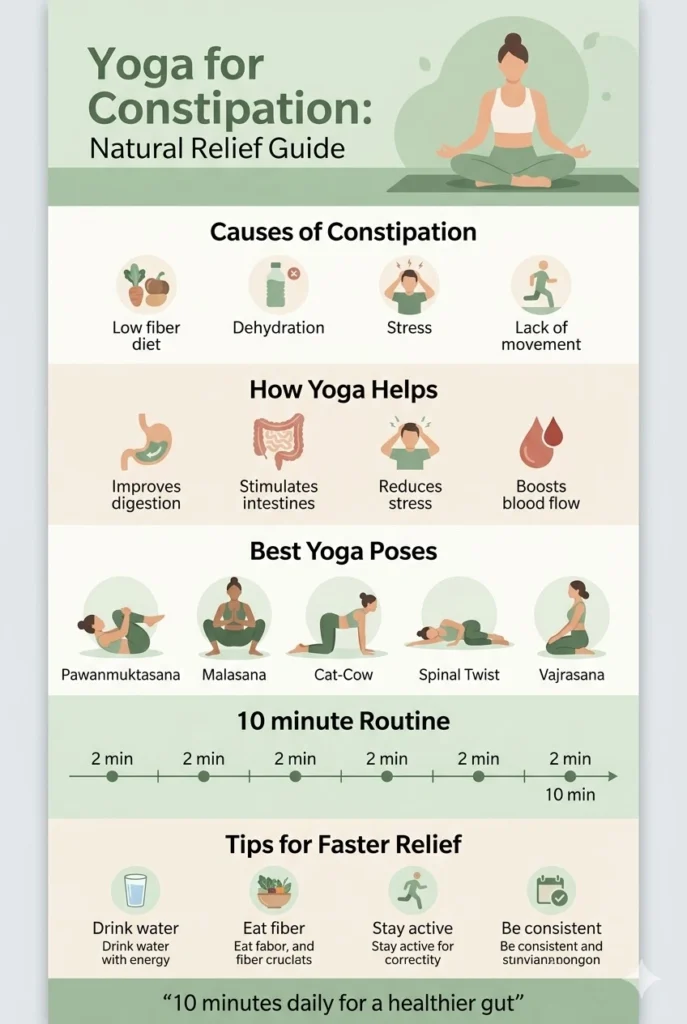
Common Causes of Constipation
Constipation can arise from multiple underlying factors:
- Low dietary fiber intake (common in refined and processed foods)
- Insufficient fluid consumption leading to dehydration
- Sedentary or inactive lifestyle
- Psychological stress and anxiety
- Sluggish intestinal motility
- Irregular eating schedules
Symptoms You Should Not Ignore
Recognizing symptoms early can help prevent chronic issues:
- Hard or compact stool
- Abdominal bloating and gas accumulation
- Persistent stomach discomfort
- Feeling of incomplete evacuation
Ignoring these warning signs can lead to chronic constipation, which may negatively affect your quality of life and digestive health.
Does Yoga Really Help Constipation?
Yes — scientific evidence strongly supports the effectiveness of yoga in improving digestive function and relieving constipation.
Yoga integrates physical movement, breathing techniques, and mental relaxation, making it uniquely effective for addressing both physical and psychological causes of constipation.
How Yoga Improves Digestion
1. Stimulates Intestinal Activity
Specific yoga postures apply gentle pressure on abdominal organs, encouraging peristalsis (the wave-like movement that pushes waste through the intestines).
2. Enhances Blood Circulation
Yoga improves blood flow to digestive organs, ensuring they receive adequate oxygen and nutrients for optimal functioning.
3. Strengthens Core Muscles
A strong abdominal region supports healthy bowel movements and improves internal organ alignment.
4. Reduces Stress Levels
Stress is a hidden contributor to constipation. Yoga activates relaxation responses that calm the nervous system.
Scientific Insight
Research indicates that yoga stimulates the parasympathetic nervous system, often referred to as the “rest-and-digest” state.
This leads to:
- Improved digestive efficiency
- Reduced bloating and discomfort
- Increased frequency of bowel movements
Clinical observations have shown that individuals with chronic constipation experience noticeable improvement after consistent yoga practice.
10 Best Yoga Poses for Constipation Relief
Below are the most effective and research-supported yoga poses that help alleviate constipation naturally.
1. Pawanmuktasana (Wind-Relieving Pose)
Benefits:
- Relieves trapped gas
- Reduces bloating
- Stimulates bowel activity
How to Perform:
Lie on your back, bring your knees toward your chest, and wrap your arms around them. Hold gently while breathing deeply.
This is widely considered the most effective posture for immediate constipation relief.
2. Ardha Matsyendrasana (Spinal Twist)
Benefits:
- Enhances digestive organ function
- Improves metabolic processes
This twisting posture massages internal organs and encourages detoxification.
3. Bhujangasana (Cobra Pose)
Benefits:
- Strengthens abdominal muscles
- Activates digestive organs
It also improves spinal flexibility while promoting internal stimulation.
4. Paschimottanasana (Seated Forward Bend)
Benefits:
- Compresses the abdominal region
- Encourages bowel movement
This pose improves digestion by applying gentle pressure to internal organs.
5. Malasana (Squat Pose)
Benefits:
- Aligns the colon naturally
- Facilitates easier elimination
This posture mimics the natural human squatting position for bowel movement.
6. Halasana (Plow Pose)
Benefits:
- Improves circulation to digestive organs
- Enhances metabolism
7. Vajrasana (Thunderbolt Pose)
Benefits:
- Aids digestion after meals
- Suitable for beginners
This is the only yoga posture recommended immediately after eating.
8. Cat-Cow Pose
Benefits:
- Improves spinal mobility
- Stimulates digestive movement
9. Child’s Pose
Benefits:
- Relieves tension
- Calms the nervous system
10. Supine Twist
Benefits:
- Releases trapped gas
- Improves digestive efficiency
10-Minute Daily Yoga Routine for Constipation
A consistent routine is essential for achieving noticeable results.
| Step | Pose | Duration | Benefit |
| 1 | Pawanmuktasana | 2 min | Stimulates bowel |
| 2 | Cat-Cow | 2 min | Improves flexibility |
| 3 | Spinal Twist | 2 min | Massages organs |
| 4 | Malasana | 2 min | Natural elimination |
| 5 | Vajrasana | 2 min | Enhances digestion |
Expected Results:
- Improved bowel movement within 3–7 days
- Reduced bloating and discomfort
- Enhanced digestive efficiency
Best Time to Do Yoga for Digestion
Morning (Ideal Time)
- Practice on an empty stomach
- Activates bowel movement naturally
After Meals
- Only Vajrasana is recommended
Evening
- Helps reduce stress-induced constipation
Diet & Lifestyle Tips
Yoga works best when combined with healthy habits.
Nutritional Recommendations
- Consume fiber-rich foods such as fruits, vegetables, and oats
- Include whole grains in your diet
Hydration
- Drink 2–3 liters of water daily
Lifestyle Practices
- Engage in daily walking or light physical activity
- Maintain a consistent eating schedule
- Limit excessive caffeine intake
Comparison Table: Yoga vs Other Remedies
| Method | Benefits | Limitations |
| Yoga | Natural, sustainable relief | Requires consistency |
| Laxatives | Immediate effect | Risk of dependency |
| Fiber Supplements | Improves stool quality | Slower results |
| Medication | Effective in severe cases | Possible side effects |
Pros & Cons of Yoga for Constipation
Advantages
- Completely natural approach
- Improves overall wellness
- Reduces mental stress
- No harmful side effects
Limitations
- Requires regular practice
- Results are gradual
- Proper technique is essential
Common Mistakes to Avoid
- Practicing inconsistently
- Ignoring hydration
- Using incorrect posture
- Expecting instant results
Safety Tips & Contraindications
Avoid If:
- Recent abdominal surgery
- Severe spinal injury
- Pregnancy (without medical consultation)
Safety Guidelines
- Begin slowly and progress gradually
- Practice on an empty stomach
- Focus on proper alignment
Yoga Philosophy & Digestive Health
In traditional yoga philosophy, digestion is associated with “Agni,” or digestive fire.
When Agni is Weak:
- Toxins accumulate
- Digestion slows
- Constipation develops
How Yoga Helps:
- Strengthens digestive fire
- Restores internal balance
- Supports natural detoxification
Home Practice Tips
- Practice indoors during cold weather
- Use a comfortable yoga mat
- Combine poses with breathing exercises
FAQs
Some poses give quick relief, but regular practice gives long-term results.
Most people see improvement within 3–7 days.
Pawanmuktasana is the most effective.
Yes, daily practice gives the best results.
Yes, for long-term relief and overall health.
Conclusion
Yoga For Constipation is not merely a physical exercise—it is a comprehensive and natural healing system. Unlike temporary solutions such as laxatives, yoga addresses the underlying causes of digestive issues by improving internal function, reducing stress, and strengthening the body.
With just 10 minutes of consistent daily practice, you can:
- Improve bowel regularity
- Reduce bloating and discomfort
- Enhance overall vitality
The key to success is consistency and patience. While results may not be immediate, they are sustainable and long-lasting.
