Introduction
Not long ago, World Yoga Day 2021 sparked shifts far beyond stretching or breathing – health suddenly meant more than just medicine. As communities stepped out of pandemic shadows, movement became medicine in its own right. Across cities in Europe, voices began sharing stories not about workouts but quiet mornings on mats. In North America, routines changed – not because experts said so, but because bodies felt different. Down under, both Australia and New Zealand saw parks fill before sunrise, not with runners, but people standing still, aware. Strength wasn’t measured in reps anymore; it showed up in calm eyes, steady breaths, and fewer words.
Each year on June twenty one, people around the world observe International Yoga Day. Following years of pandemic strain, the two thousand twenty-one version highlighted mental calm, stronger immunity, because it aimed at steadying emotions through practice.
Nowhere was stillness practiced more than in city parks where breathwork met morning light. Online videos brought poses into cramped apartments once reserved for sleep only. Gatherings formed on hillsides, led by voices that favored silence over slogans. Screens hosted circles of calm, clicking together across time zones. Attention shifted toward balance, not because experts said so, but because bodies demanded it. Quiet routines replaced old rhythms without announcement or fanfare.
- You’re about to dive into what’s inside this piece
- Historical development of International Yoga Day
- Psychological and physiological advantages of yoga
- A clear plan for learning yoga step by step
- Beginner, intermediate, and expert yoga postures
- European wellness tourism and yoga lifestyle trends
- Fitness fashion and wellness shopping insights
Understanding World Yoga Day 2021
Historical Evolution of International Yoga Day
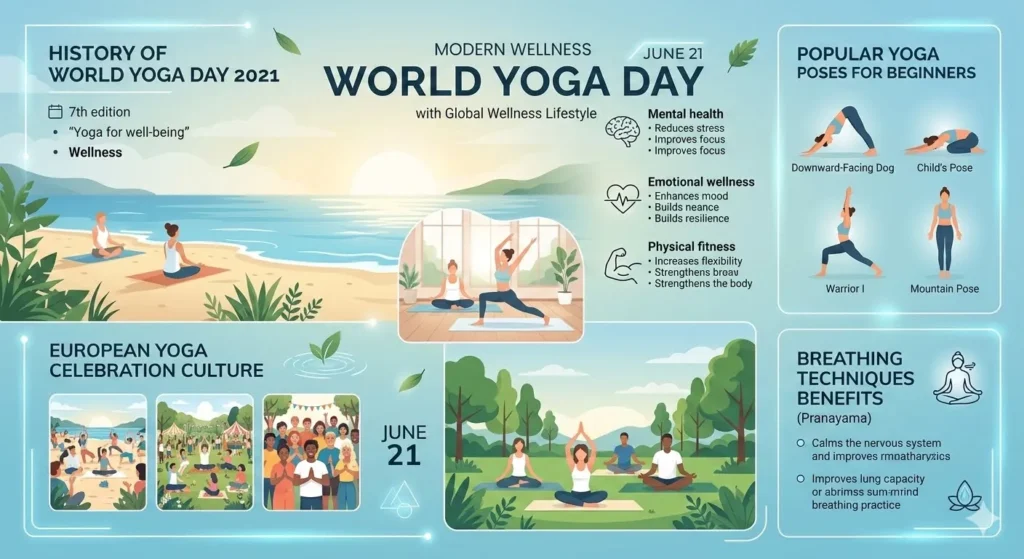
One country had an idea – Yoga Day – and shared it with the world through a big meeting of nations back in 2014. Starting the next year, people everywhere began marking June 21 each time around. That date? It lines up with nature’s longest day, when light lingers and life feels more alive. Moments like these spark inner shifts. They also tie human rhythms to Earth’s quiet pulse across seasons.
Festivities mirror a blend of shared awareness, physical wellness, stronger thinking. From old beliefs to today’s lab studies, yoga weaves threads across time.
Why 2021 Became Extremely Significant
That year stood out, seeing communities slowly step away from long months of isolation. Recovery began, though unevenly, as people adjusted to shifting routines. Instead of staying shut in, movement resumed – carefully, cautiously. Changes unfolded without clear blueprints, driven more by necessity than planning. Some patterns faded, while new habits took root unexpectedly
- Increased global mental health awareness
- Rise of home workout culture
- Growth of online wellness education
- Government-supported public fitness initiatives
Yoga began showing up in daily routines, not just for movement, but slowly became a way to steady the mind and balance life’s rhythm.
Yoga Popularity Growth Across European Nations
| Country | Popularity Level | Dominant Yoga Style |
| Spain | Extremely High | Beach Meditation Yoga |
| Germany | Very High | Therapeutic Rehabilitation Yoga |
| Italy | Growing Fast | Relaxation Breathing Yoga |
| United Kingdom | Extremely High | Fitness-Performance Yoga |
| France | Moderate Growth | Mindfulness Meditation Yoga |
Spain became famous for coastal wellness exercise sessions along the Mediterranean shorelines. Meanwhile, Germany and Britain adopted yoga in corporate health programs to improve workforce productivity and reduce stress-related burnout.
Physical, Mental, and Emotional Advantages of Yoga Practice
Psychological Advantages
Yoga practice provides cognitive enhancement and emotional stability by:
- Reducing anxiety levels
- Improving attention concentration
- Supporting emotional trauma recovery
- Enhancing mindfulness perception
Fewer stress signals travel through nerves when people do yoga often – research shows this links to less cortisol floating in the body. A quieter mind might start here, without loud chemical noise calling the shots.
Physical Health Advantages
Regular yoga training contributes to physical development by:
- Increasing muscle flexibility
- Strengthening cardiovascular endurance
- Improving respiratory efficiency
- Supporting posture correction
Built-in motion patterns in yoga pull several muscles into play at once, boosting how well your body lines up its moves. This kind of flow smooths out shifts from one position to another.
Emotional Wellness Advantages
Yoga also improves emotional intelligence by:
- Increasing self-confidence
- Supporting sleep quality improvement
- Stabilizing emotional fluctuations
Mind-body harmony becomes achievable through consistent breathing and meditation exercises.
Best Yoga Poses for World Yoga Day 2021 Practice
Beginner Level Yoga Movements
Child Relaxation Posture (Balasana Style Practice)
Benefits:
- Stress elimination
- Back muscle relaxation
Execution Steps:
- Kneel on the yoga mat surface
- Stretch arms forward slowly
- Maintain a slow breathing rhythm
Targeted Body Areas:
- Spine muscles
- Shoulder joints
- Upper back zones
Tree Balance Posture (Vrikshasana Style Balance Training)
Benefits:
- Improves equilibrium control
- Enhances mental concentration
Tips:
- Beginners can practice near wall support structures
Cat-Cow Motion Exercise
Benefits:
- Spine flexibility improvement
- Psychological stress reduction
This movement became popular inside European corporate wellness centers.
Intermediate Yoga Training Techniques
Bridge Body Lift Posture
Advantages:
- Strengthens lower body muscles
- Improves chest opening flexibility
Downward-Facing Stretch Posture
Benefits:
- Improves blood circulation
- Provides full body stretching effect
Advanced Yoga Training Positions
Crow Balance Posture
Requires:
- Strong core muscle control
- Arm strength development
Only experienced practitioners should attempt advanced yoga balancing exercises.
Step-by-Step World Yoga Day Practice Routine
Preparation Environment Setup
Create a peaceful meditation environment:
- Use a comfortable yoga mat
- Wear breathable fitness clothing
- Select quiet surroundings
European fitness brands often promote lightweight training apparel for yoga performance optimization.
Warm-Up Session (10 Minutes)
Perform gentle physical activation exercises:
- Neck rotation exercises
- Shoulder circular movements
- Light body stretching
Warm-up prevents muscle injury risk.
Core Yoga Session (30–40 Minutes)
Include:
- Breathing Techniques
- Standing postures
- Floor-based postures
- Final relaxation pose
Meditation Practice (10 Minutes)
Focus on:
- Controlled breathing rhythm
- Positive affirmation repetition
- Mental visualization techniques
Meditation improves the neurological relaxation response.
Pranayama Breathing Science Techniques
| Technique | Advantage | Duration |
| Deep Lung Breathing | Stress reduction | 5 Minutes |
| Alternate Nostril Breathing | Mental balance | 8 Minutes |
| Abdominal Breathing | Relaxation | 5 Minutes |
Breathing control remains fundamental in yoga philosophy.
Muscle Groups Activated During Yoga
| Body Area | Training Benefit |
| Core Muscles | Stability & balance |
| Leg Muscles | Strength development |
| Back Muscles | Posture correction |
| Shoulder Muscles | Tension reduction |
Common Yoga Training Mistakes
Avoid these errors:
- Holding breath during movements
- Overstretching muscles aggressively
- Ignoring the warm-up routine
- Practicing Yoga on hard floor surfaces
European instructors emphasize slow movement precision rather than forceful stretching.
Who Should Avoid Intensive Yoga Practice?
Individuals with:
- Severe spinal injuries
- Recent surgical recovery
- Complex pregnancy medical conditions
Medical consultation is recommended before starting intensive fitness training.
Nutrition Lifestyle Recommendations for Yoga Practitioners
Best Dietary Choices Include:
- Fresh seasonal fruits
- Nuts and natural seeds
- Whole grain products
Mediterranean diet patterns are highly recommended in European wellness culture because they provide energy balance and immune system support.
Home Yoga Training Strategies
During global lockdown periods, home yoga training became extremely popular.
Popular methods include:
- Online yoga instructors
- YouTube fitness tutorials
- Virtual wellness communities
Home training provides flexibility and time management advantages.
Yoga Fashion Lifestyle & Fitness Apparel Trends
Premium Yoga clothing improves performance comfort.
Tips for shopping wellness apparel:
- Wait for seasonal discount campaigns
- Subscribe to fitness brand newsletters
- Follow wellness influencers
Premium fitness apparel supports body movement flexibility.
European Cultural Yoga Celebrations
Spain
- Beach meditation sessions
- Coastal sunrise yoga events
Germany
- Corporate wellness yoga workshops
United Kingdom
- Online global yoga marathon sessions
Italy
- Yoga sessions near historical and cultural monuments
The tourism wellness industry benefits significantly from yoga culture.
Advantages and Disadvantages of a Yoga Lifestyle
Advantages
Mental health improvement
Fitness enhancement
Suitable for all age groups
Low injury probability
Disadvantages
Requires long-term consistency
Results appear gradually
Beginners may feel muscle stiffness
Recommended Yoga Practice Duration
| Experience Level | Daily Practice Time |
| Beginner | 20–30 Minutes |
| Intermediate | 45 Minutes |
| Advanced | 60 Minutes |
Yoga Philosophy and Scientific Foundations
Yoga philosophy combines ancient spiritual traditions with modern biological science.
Benefits include:
- Blood pressure regulation
- Hormonal balance control
- Immune defense improvement
Mind-body connection remains the primary yoga principle.
Scientific Research Perspective
Medical research indicates yoga helps:
- Reduce chronic stress disorders
- Improve cardiovascular performance
- Enhance cognitive functions
Yoga therapy is now recognized in global wellness medicine.
FAQs
A: To promote global health awareness and physical and mental harmony.
A: Yes. European wellness centers provide beginner-friendly programs.
A: Yes. Yoga improves psychological resilience.
A: Yoga mat
Comfortable clothing
A: Start with 20-minute daily sessions.
Final Conclusion
That June morning, bodies stretched under shared skies, a quiet rebellion against isolation. Healing found voice not in pills but in breath drawn together across borders. Where pain had been, movement now spoke – slow, steady, alive. Minds Cleared not by force but through rhythm passed hand to unseen hand. Spirit stayed grounded, not in temples, yet in spines aligned beneath open air.
Finding calm on Spanish shores, within German boardrooms, even quiet corners of British houses – each space holds the same steady practice. Wherever it unfolds, breath and motion still shape a resilient way of living.
Showing up each time matters most when doing yoga. Wait without rushing through changes that take time. Stick to the routine even when motivation fades away.
