Yoga Symbols & Their Deep Meanings
Introduction: Why Yoga Symbols Matter
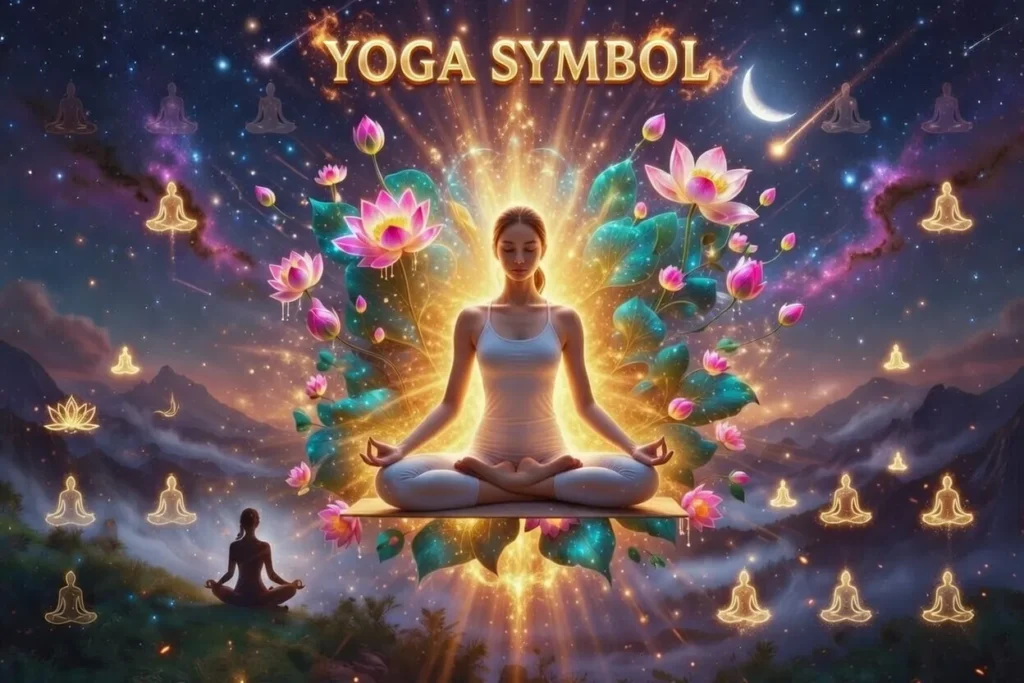
Beyond mere body movement, yoga carries a deeper purpose. Yoga Symbol stands as an old practice rooted in reverence – meant to balance inner forces with physical stillness. Breath becomes part of the rhythm. Awareness shifts slowly, guided by timeless patterns. It is an inner science of self-realization.
One of the most profound dimensions of this ancient tradition is the use of sacred yoga symbols.
Yoga symbols are not decorative graphics or modern branding elements. Older than history, these tools carry hidden wisdom through the ages. Not just objects – they’ve breathed life into seekers for many a century. From forest hermits to city ashrams, their role stays fixed: anchor mind, open heart. During quiet moments, they’ve helped people chant, breathe deeply, reflect, or simply tune in.
Every sign holds multiple layers of meaning. Acting like a mental trigger, it opens doors to inner knowledge. Shaped by shape, structure, rhythm, and ancient images, yoga signs transform deep ideas into something felt naturally.
Explanation
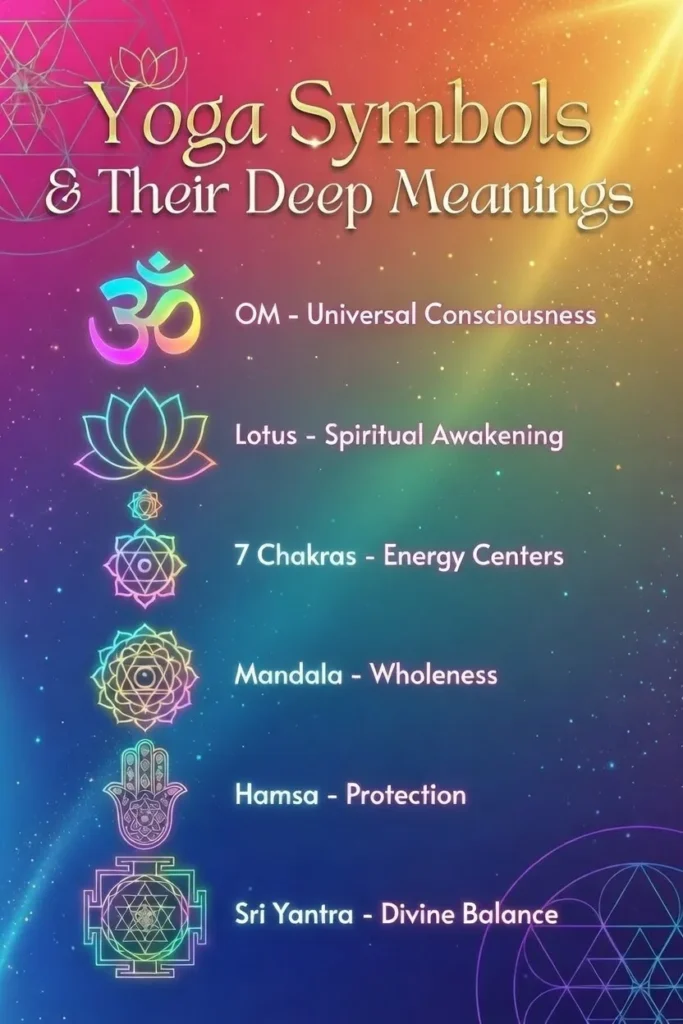
Starting with the first hum of OM, moving through the clean light of the Lotus, passing by the subtle patterns of the Chakras, ending at the balanced design of the Sri Yantra – these holy symbols point to:
- Universal intelligence
- Inner equilibrium
- Liberation (moksha)
Long ago, writers placed certain marks into texts like the Yoga Sutras of Patanjali, the Upanishads, and the Bhagavad Gita – well before modern yoga spaces, sporty clothing, or online sharing took shape.
Today, yoga symbols appear on:
- Yoga Mats
- Studio walls
- Jewelry
- Tattoos
- Meditation tools
- Clothing designs
Still, plenty wear these symbols without knowing where they came from. Used carelessly, their real power fades – twisted, ignored, even harmed by culture.
This comprehensive guide resolves that issue.
In this pillar article, you will learn:
- The authentic meaning of major yoga symbols
- Their scriptural origins and spiritual relevance
- Correct ways to integrate them into practice
- Cultural respect guidelines
- How symbols enhance meditation, mindfulness, and energetic balance
Starting from anywhere – beginner, learner, or someone walking a path – seeing what symbols on a yoga mat point to changes how one moves through poses.
What Is a Yoga Symbol?
A yoga symbol is a visual, sonic, geometric, or energetic representation that communicates profound spiritual principles in simplified form.
Unlike ordinary icons, yoga symbols are experiential. Their significance unfolds through direct engagement, contemplation, repetition, and internal awareness.
They originate from:
- Sanskrit phonetics
- Vedic cosmology
- Tantric diagrams
- Yogic metaphysics
- Vedantic philosophy
A yoga symbol may appear as:
- A sacred sound (OM)
- A geometric mandala
- A lotus diagram
They function as bridges — linking the tangible world with subtle dimensions of awareness.
Benefits of Understanding Yoga Symbols
Developing knowledge of sacred yoga imagery strengthens practice on multiple levels.
Mental Benefits
Understanding yoga symbols enhances cognitive focus and psychological clarity.
- Helps to concentrate during meditation.
- Lessens the distractive state of mind and loss of focus.
- Increases mindfulness awareness.
- Grows the will-forming ability.
- Promotes self-thinking and reflection.
When the mind has a sacred focal point, it stabilizes more easily.
Emotional Benefits
Symbols can ground emotional turbulence.
- Promotes resiliency of emotions.
- Builds inner stability
- Promotes self-reflection
- Minimizes anxiety and nervousness.
- Cultivates compassion
Sacred imagery often provides reassurance and psychological security.
Spiritual Benefits
At the spiritual level, yoga symbols awaken subtle awareness.
- Enhance attachment to the philosophy of yoga.
- Support chakra alignment
- Amplify mantra practice
- Enhance pranayama
- Promote work ethics and piety.
They become instruments of transformation rather than decoration.
The OM Symbol — Meaning, History & Use
What Does OM Mean in Yoga?
OM is equated to the initial vibration of the universe. It is termed the primordial cosmic resonance on which creation comes into being.
The Mandukaya Upanishad is a description of OM as the sound-symbol of ultimate reality.
In yogic cosmology, OM represents:
- Creation
- Preservation
- Dissolution
- Transcendence
It is not merely a sound but a vibrational frequency that aligns consciousness.
Symbolic Meaning of OM
OM consists of four components:
A – Waking consciousness
U – Dream state
M – Deep sleep
Silence – Pure awareness (Turiya)
These four states represent the complete human experience.
The written symbol also contains symbolic curves representing layers of consciousness.
How OM Enhances Yoga Practice
- Synchronizes breath and movement
- Calms the nervous system
- Encourages group unity
- Renders the mind meditative.
- The body vibration is controlled.
Scientific research indicates that the chanting of OM works on the parasympathetic nervous system, which makes one feel relaxed.
How to Use OM
- Chant at the beginning or end of class
- Focus on the OM symbol during meditation
- Use in Japa (mantra repetition)
- Visualize vibration radiating outward
Lotus Symbol — Purity, Growth & Enlightenment
The lotus flower is a universal marker of Spiritual Development.
It is an indication of transcendence as it grows out of muddy waters but blossoms untouched.
What the Lotus Represents
- Rising beyond suffering
- Emotional purification
- Detachment from ego
- Spiritual rebirth
- Enlightenment
In chakra symbolism, the thousand-petal lotus represents expanded consciousness.
Yoga Applications
- Meditation visualization
- Crown chakra imagery
- Symbol of awakening
- Representation of divine beauty
The Lotus is the lesson of stability and spiritual brightness.
Chakras — Energy Centers & Their Symbols
Chakras are points of energy that are found along the spinal axis.
The chakra system is expounded in the tantric and contemporary disciplines, such as the Bihar School of Yoga.
Each chakra includes:
- Symbol
- Color
- Seed mantra
- Psychological qualities
Chakra Overview
Root – Stability
Sacral – Creativity
Solar Plexus – Personal power
Heart – Love
Throat – Expression
Third Eye – Intuition
Crown – Enlightenment
Chakra symbols include geometric shapes representing energetic functions.
How Chakras Are Used
- Visualization meditation
- Breathwork
- Emotional healing
- Spiritual mapping
Understanding chakra symbols enhances subtle body awareness.
Mandala — The Circle of Wholeness
Mandala means “circle” in Sanskrit.
It symbolizes totality, cosmic order, and inner completeness.
Carl Jung considered mandalas archetypes of psychological integration.
Meaning of Mandalas
- Unity
- Balance
- Harmony
- Order emerging from chaos
- Journey toward the center
How Mandalas Are Used
- Meditation Tools
- Stress reduction practices
- Creative self-discovery
- Ritual art
Coloring or gazing at mandalas induces calm focus.
Hamsa — Protection & Balance
The Hamsa hand symbolizes protection and awareness.
It represents shielding from negative energy and fostering mindfulness.
Spiritual Meaning
- Protection
- Balance
- Harmony
- Divine watchfulness
Usage in Yoga Culture
- Jewelry
- Studio decor
- Spiritual intention objects
When used respectfully, it symbolizes energetic safeguarding.
Namaste & Hand Mudras
Meaning of Namaste
Namaste means:
“The light in me honors the light in you.”
It represents unity, humility, and shared consciousness.
Purpose of Mudras
Mudras are hand gestures directing prana (life-force energy).
They:
- Channel energy
- Improve concentration
- Support emotional regulation
Common Mudras
Anjali Mudra – Gratitude
Gyan Mudra – Wisdom
Prana Mudra – Vitality
Mudras create energetic circuits within the body.
Sri Yantra & Sacred Geometry
Sri Yantra is one of the most powerful sacred geometric diagrams in tantra.
It consists of interlocking triangles representing cosmic duality.
Symbolic Meaning
- Union of masculine and feminine energies
- Creation and dissolution cycles
- Divine harmony
- Manifestation power
The Sri Yantra is discussed in tantric traditions and Vedantic studies.
How It’s Used
- Advanced meditation
- Concentration training
- Ritual worship
- Visualization discipline
It requires guidance and respect to be used properly.
How to Use Yoga Symbols in Daily Practice
You can integrate yoga symbols intentionally:
Meditation focal point
Breath awareness anchor
Visualization support
Intention setting
Sacred art placement
Conscious tattoo symbolism
Always combine Symbolism with awareness.
Common Mistakes to Avoid
- Using symbols only as decoration
- Ignoring philosophical context
- Commercial exploitation
- Cultural appropriation
- Blind imitation without study
Understanding brings authenticity.
Safety & Cultural Respect Tips
- Study sources
- Respect cultural roots
- Avoid trivializing sacred symbols
- Practice with humility
Yoga originated in ancient India. Awareness honors tradition.
Pros & Cons of Using Yoga Symbols
Pros
- Deepens spiritual practice
- Enhances meditation
- Strengthens intention
- Encourages discipline
- Builds focus
Cons
- Misinterpretation
- Cultural misuse
- Over-simplification
Education prevents misuse.
FAQs
OM is the most fundamental symbol of yoga.
They are spiritual but not tied to one religion.
Yes, understanding grows with practice.
Yes, when used with awareness.
Conclusion: Finding Your Symbolic Connection
Yoga Symbols are timeless spiritual technologies. These hold bits of knowledge, awareness, shape, movement, thought – made clear in ways we can grasp.
These poses point out that yoga goes beyond physical action. It carries meaning, brings awareness, sparks change, one way or another. Illumination happens when done right.
Only by correct use do symbols like OM, Lotus, Chakras, Mandalas, and Sri Yantra open paths toward knowing oneself.
Look into where they came from instead of calling them trendy. Think about what they suggest about what exists beyond the physical world. Let each one shape how you breathe, keep your thoughts clear, while lifting awareness.
