
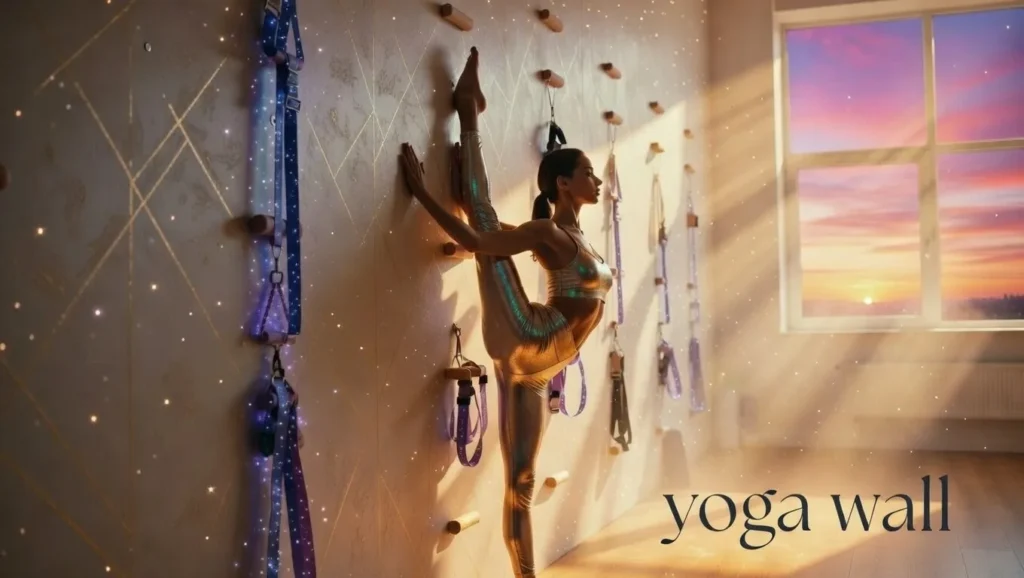
Yoga Wall: The Ultimate 2026 Guide
Introduction: Why the Yoga Wall Is Rapidly Expanding Across Europe
In 2026, using the Yoga Wall is changing the contemporary way. In contrast to the traditional mat-based yoga wall is provided with the usage of ropes, belts, hooks, and vertical anchoring systems in order to provide the body with the weight-supporting features by means of suspension and traction. Such a strategy allows practitioners to stretch further without sore joints, gain strength with less risk of injury, and invert without being unsafe.
The expansion of yoga walls in Europe, Canada, and Australia indicates a wider move towards the alignment-based, biomechanics-informed yoga training. Practitioners are no longer interested in flexibility, but in precision, injury prevention, and measurable progress.
What Is a Yoga Wall?
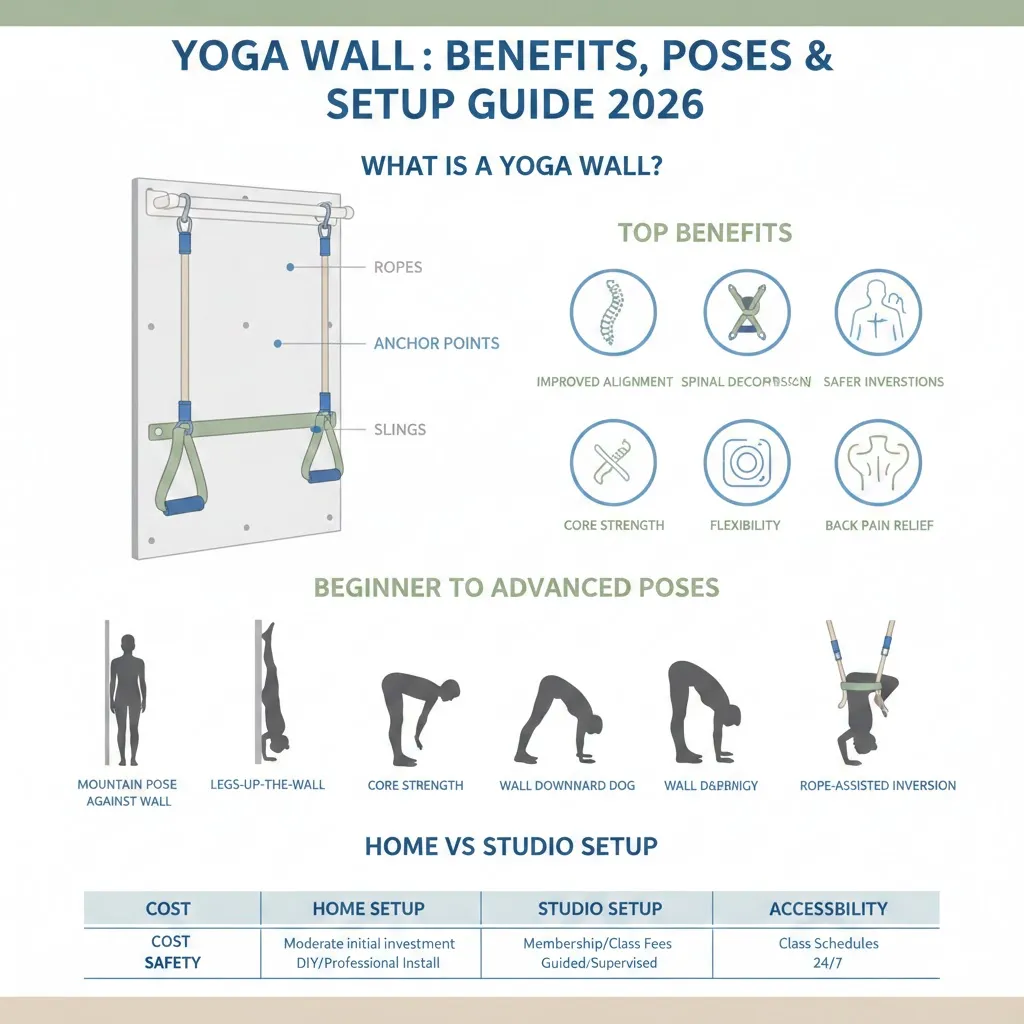
A yoga wall is a permanently fixed structural installation that has the following:
- Reinforced wall anchors
- Ropes made of cotton or Nylon which are adjustable.
- Supportive straps and loops
- Slings or cloth harnesses are optional.
Yoga was founded by B. K. S. Iyengar, who had a strong influence on this concept. Iyengar focused on the use of anatomical precision, structural balance, and intelligent use of props to enable students to have an experience of poses in which they feel safe and correct.
The rope wall is an extension of his early work with wall-mounted ropes in India, which the students with little mobility, spinal conditions, and postural imbalances needed.
How a Yoga Wall Works
A yoga wall utilizes:
- Gravity-assisted traction
- Bodyweight suspension
- Controlled decompression
- Neuromuscular re-education
- Wall contact as tactile feedback
The system does not rely on muscular effort to force the range of movement as it allocates load by using straps and anchors. This helps to decrease the shear stress on the joints and the gradual elongation of muscles and fascia.
Mechanically, it supports:
- Reduced joint compression
- Improved postural stacking
- Safer inversions
- Controlled eccentric stretching
The result is a hybrid of strength training, assisted stretching, and therapeutic traction.
History & Evolution of Yoga Wall Practice
The rope wall was invented in mid 20 th century India, after Iyengar started attaching ropes to walls to enhance easy access to higher poses by the students. His approach was based on refinement of alignment and progressive sustainability.
As early as the 1980s, commercial systems like The Great Yoga Wall were widely spread across the world, with anchors being spaced in a consistent manner and rope material being used to ensure safer installation.
Today, yoga wall studios are increasingly common in:
- Madrid
- Munich
- Milan
- London
- Canadian urban wellness centers
- Australian retreat facilities
Wall yoga is no longer a niche practice in the therapeutic system, but mainstream training based on alignment in Europe.
Why the Yoga Wall Feels Distinct from Traditional Yoga
| Feature | Yoga Wall | Traditional Yoga |
| Alignment Feedback | Extremely high | Moderate |
| Inversion Stability | High | Variable |
| Joint Compression | Minimized | Skill-dependent |
| Accessibility | Beginner-inclusive | Experience-dependent |
| Rehabilitation Support | Strong | Moderate |
Why It Feels Unique
The Traditional Yoga is based mostly on concentric and eccentric muscular activities. Wall yoga integrates:
- Active stabilization
- Passive elongation
- Assisted traction
- Gravitational leverage
This combination produces both a strengthening stimulus and therapeutic decompression within a single session.
Top 12 Benefits of Yoga Wall Practice
Enhanced Alignment Awareness
The wall provides immediate tactile correction. Deviations in posture become perceptible through contact feedback.
Spinal Decompression
Rope-supported traction gently separates vertebrae, reducing compressive load on intervertebral discs — especially beneficial for sedentary office workers.
Safer Inversions
Wall-assisted shoulder stands and supported inversions reduce fall probability and cervical strain.
Deep Hip Mobility
Gradual strap-supported hip opening reduces ligament overstress.
Core Stabilization
Suspension activates the transverse abdominis and deep stabilizing musculature.
Back Discomfort Relief
By reducing lumbar compression, traction may ease mild back stiffness (medical consultation recommended).
Increased Flexibility
Controlled elongation promotes progressive range-of-motion gains.
Therapeutic Application
Physical therapists use traction principles similar to rope-based decompression systems.
Circulatory Enhancement
Inversions support venous return and lymphatic drainage.
Confidence Development
Fear of falling diminishes with anchored support.
Improved Proprioception
Wall contact heightens spatial awareness.
Senior-Friendly Accessibility
Older adults benefit from structured support and balance assistance.
Step-by-Step Yoga Wall Poses
Beginner Sequence (20 Minutes)
1. Mountain Pose Against Wall
Steps:
- Stand with heels lightly touching the wall
- Rest the sacrum and shoulder blades gently
- Lengthen spine vertically
- Engage the abdominal wall subtly
Breathing: Inhale 4 seconds, exhale 6 seconds.
Benefits: Postural retraining and spinal neutrality awareness.
2. Legs-Up-The-Wall (Viparita Karani)
Sit sideways near the wall and swing your legs upward.
This restorative inversion, traditionally known as Viparita Karani, promotes relaxation and venous return.
Benefits include recovery, stress reduction, and improved circulation.
3. Wall-Assisted Forward Fold
- Face away from the wall
- Hinge from the hips
- Allow straps to provide gentle traction
Encourages hamstring elongation without excessive lumbar strain.
Intermediate Poses
4. Wall Downward Dog
Feet press into the wall at hip height.
Targets the posterior chain and shoulder stabilization.
5. Supported Lunge with Straps
Straps assist in controlled hip flexor expansion.
6. Wall Plank
Feet anchored against the wall to intensify core engagement.
Advanced Poses
7. Supported Backbend
Straps are placed at the pelvic crest to allow traction-supported spinal extension.
8. Rope-Assisted Inversion
Safer variation of the shoulder stand and supported inversion drills.
9. Deep Hip Opener Suspension
Full bodyweight suspension promotes fascial decompression.
Muscles Activated Training
It engages in practice:
- Core stabilizers (transverse abdominis)
- Erector spinae
- Gluteus maximus
- Hamstrings
- Deltoids
- Hip flexors
- Deep scapular stabilizers
Suspension increases activation of often underutilized micro-stabilizing muscles.
Proper Form & Alignment Guidance
Maintain gentle abdominal engagement
Avoid hyperextension of the knees
Transition gradually
Preserve neutral spine alignment
Exit straps deliberately
Precision reduces strain and enhances neuromuscular learning.
Breathing Technique for Safe Practice
Employ diaphragmatic respiration:
- Inhale through the nose for 4 seconds
- Brief pause
- Exhale slowly for 6 seconds
Controlled breathing prevents overstretch reflex and supports parasympathetic activation.
Common Mistakes to Avoid
- Forcing depth during traction
- Neglecting warm-up
- Misplacing straps
- Breath retention
- Ignoring discomfort signals
Intentional pacing is essential.
Safety Tips & Contraindications
Safety Checklist
Verify anchor integrity
Install professionally
Inspect ropes regularly
Warm up thoroughly
Avoid or Consult a Doctor If You Have:
- Glaucoma (inversion risk)
- Severe disc herniation
- Uncontrolled hypertension
- Recent surgery
Yoga Wall at Home vs Studio Setup
| Factor | Home | Studio |
| Cost | €200–€800 | Included in membership |
| Safety | Requires verification | Professionally installed |
| Access | Anytime | Scheduled |
European practitioners must confirm the wall’s structural load-bearing capacity before installation.
Duration & Frequency
- Beginners: 2 sessions weekly (20–30 minutes)
- Intermediate: 3–4 sessions weekly
- Advanced: integrated daily practice
Flexibility gains often emerge within 4–6 weeks.
The Science Behind the Yoga Wall
Yoga wall training combines:
- Myofascial release
- Isometric contraction
- Mechanical traction
- Neuromuscular adaptation
European physiotherapy clinics employ comparable decompression strategies to relieve Spinal Pressure.
Traction may:
- Reduce nerve compression
- Improve circulation
- Enhance joint mobility
- Promote fascial glide
Research in biomechanics suggests that controlled decompression can support disc hydration and reduce axial load.
Integrating Yoga Poses for 3 into Wall Practice
Group-supported flows may include:
- Triple-supported forward fold
- Three-person assisted backbend
- Group balance wall drill
Popular in retreats across Spain, Germany, and Italy, these sequences foster collaboration and shared stabilization.
Benefits include:
- Cooperative balance
- Social bonding
- Collective support
- Communication skills
Yoga Wall vs Traditional Yoga (Pros & Cons)
Advantages
- Safer for beginners
- High alignment feedback
- Strong rehabilitative potential
- Reduced compression stress
Limitations
- Installation requirement
- Higher initial expense
- Learning adaptation period
Traditional Yoga Advantages
- Portable
- Equipment-free
- Universally accessible
Traditional Yoga Limitations
- Less structural guidance
- Greater inversion risk
Who Should Practice Yoga Wall?
Ideal for:
- Office professionals
- Seniors
- Individuals with mild spinal stiffness
- Beginners are hesitant about inversions
- Athletes enhancing flexibility
Wall yoga supports both rehabilitation and performance optimization.
FAQs
Yes, when supervised or professionally installed.
Yes, but ensure structural compliance and safe installation.
It may assist spinal decompression. Consult a medical professional first.
It depends on your goal: therapy and alignment vs portability.
Flexibility improvements often appear within 4–6 weeks.
Conclusion
The Yoga Wall is not merely a trend — it is a structured evolution in contemporary yoga methodology.
Across London, Spain, Germany, Canada, and Australia, wall-supported systems provide:
- Enhanced posture
- Safer inversions
- Deeper mobility
- Greater kinesthetic intelligence
In the case of amateurs, it establishes confidence.
In higher-level practitioners, it makes them more accurate.
It provides a systematic support to therapeutic seekers.
The yoga wall will be a sophisticated, alignment-focused strategy of sustainable movement, resilience, and functional strength in 2026 and beyond.
