
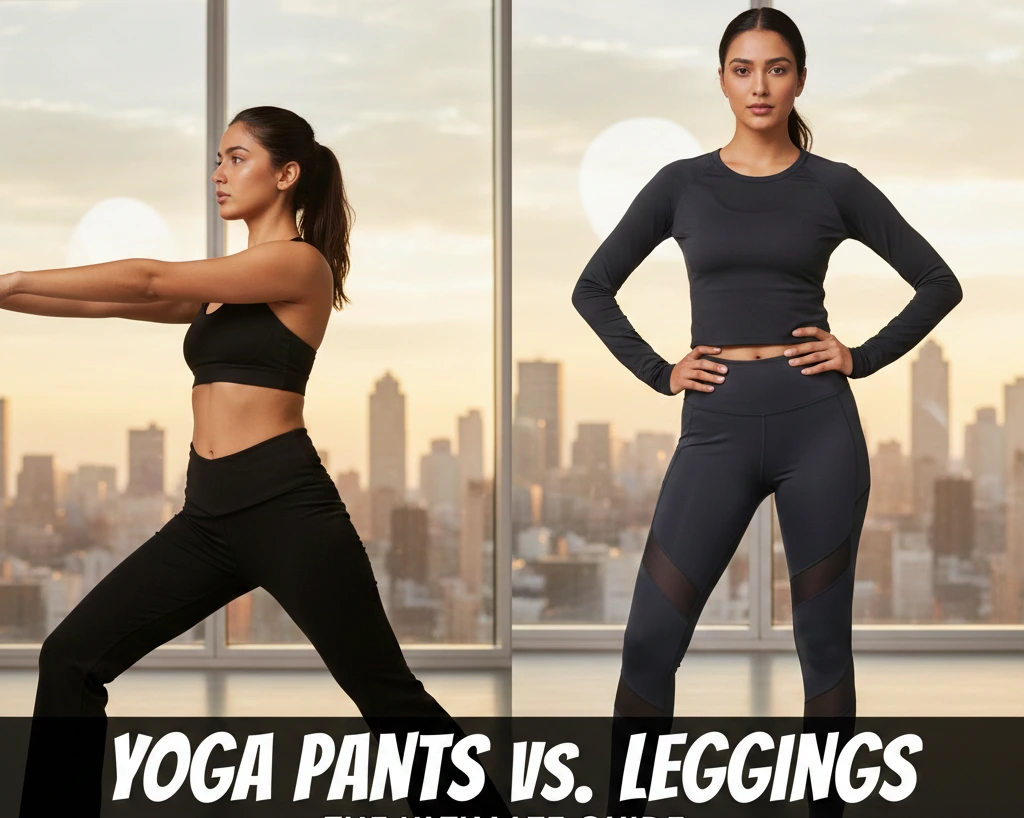
Yoga Pants vs Leggings
The decision between Yoga Pants and leggings is easy until you are actually on the ground in a yoga class, at a gym session, on a long walk, or even on a day out and a long day. Yoga pants vs leggings, printed as a hanger or a photo of products, they can be almost identical. In actual life, though, a wrong decision could mutely influence comfort, quality of movement, awareness of posture, confidence, muscular support, breathability, and even injury prevention.
In this in-depth comparison, you’ll learn:
- The real explanation of the difference between yoga pants and leggings.
- What is the best choice between yoga, gym training, running, lounging, and everyday wear?
- The reality of the fabric thickness, elasticity, waistband construction, and squat-proof performance.
- Fashion, quality, retail reasoning, and intelligent purchasing solutions.
- An easy decision based on your body type, level of activity, and lifestyle requirements.
Let’s break it down clearly, honestly, and practically.
What Are Yoga Pants?
Yoga pants refer to performance athletic bottoms that are tailor-made towards yoga, pilates, stretching, and controlled functional movement. They serve mainly to facilitate mobility, balance, flexibility, breath awareness, and stability during full-range movement.
Yoga pants are based on movement mechanics before aesthetics, unlike bottoms based on fashion.
Key Features of Yoga Pants
Modern yoga pants typically include:
- Thick, high-performance textile blends.
- Abdominal and lumbar support high-rise or wide waistbands.
- Four-directional stretch (horizontal and vertical elasticity)
- One of the strong features of shape retention is with repeated stretching.
- Breathable and moisture-controlling fibers.
- Squat-resistant and opaque construction.
These characteristics make yoga pants ideal for yoga flows, pilates sessions, gym workouts, mobility drills, and low-to-moderate impact training.
A Brief History of Yoga Pants
Yoga pants started entering the mainstream in the late 1990s when yoga began spreading rapidly around North America and Europe. Early designs were:
- Flared or cut at the ankle.
- Produced using cotton-spandex blends.
- Designed to provide movement of air and free movement of feet.
The development of yoga pants was dramatic as the technology of the textile industry grew. Today’s options include:
- Straight-leg yoga pants
- Perfectly flared studio styles.
- Limbo athletic styles of leggings and trousers.
- Studio and gym crossover yoga pants of high compression.
In modern life, yoga pants are worn far beyond yoga studios. Many people now use them for:
- Resistance training
- Pilates and barre
- Stretching routines
- Lounging and travel
- Casual daily wear
Despite these adaptations, their core identity remains performance-driven.
What Are Leggings?
Leggings are tight-fitting garments that contour closely to the body from waist to ankle. Historically, they were introduced as Fashion Layers, not technical workout apparel.
Over time, leggings expanded into many categories—some athletic, many purely aesthetic.
Common Types of Leggings
The leggings are available in many styles, and they include:
- Cotton lifestyle leggings
- Fashion leggings made of faux leather.
- Fleece-lined and thermal leggings.
- patterned or printed designs.
- Athletic or gym leggings
- Compression-focused leggings
Key Characteristics of Leggings
Most leggings share these traits:
- Thin to medium fabric density
- Body-hugging silhouette
- Wide color and pattern selection
- Variable waistband quality
- Often less structural support than in yoga pants
- Design focuses on appearance and not biomechanics.
Certain athletic leggings overlap with yoga pants, and this is one of the reasons why confusion. Nevertheless, a big proportion of leggings, particularly those that are fashionable, are not created towards repetitive bending, stretching, and load-bearing action.
That distinction matters more than people realize.
Yoga Pants vs Leggings
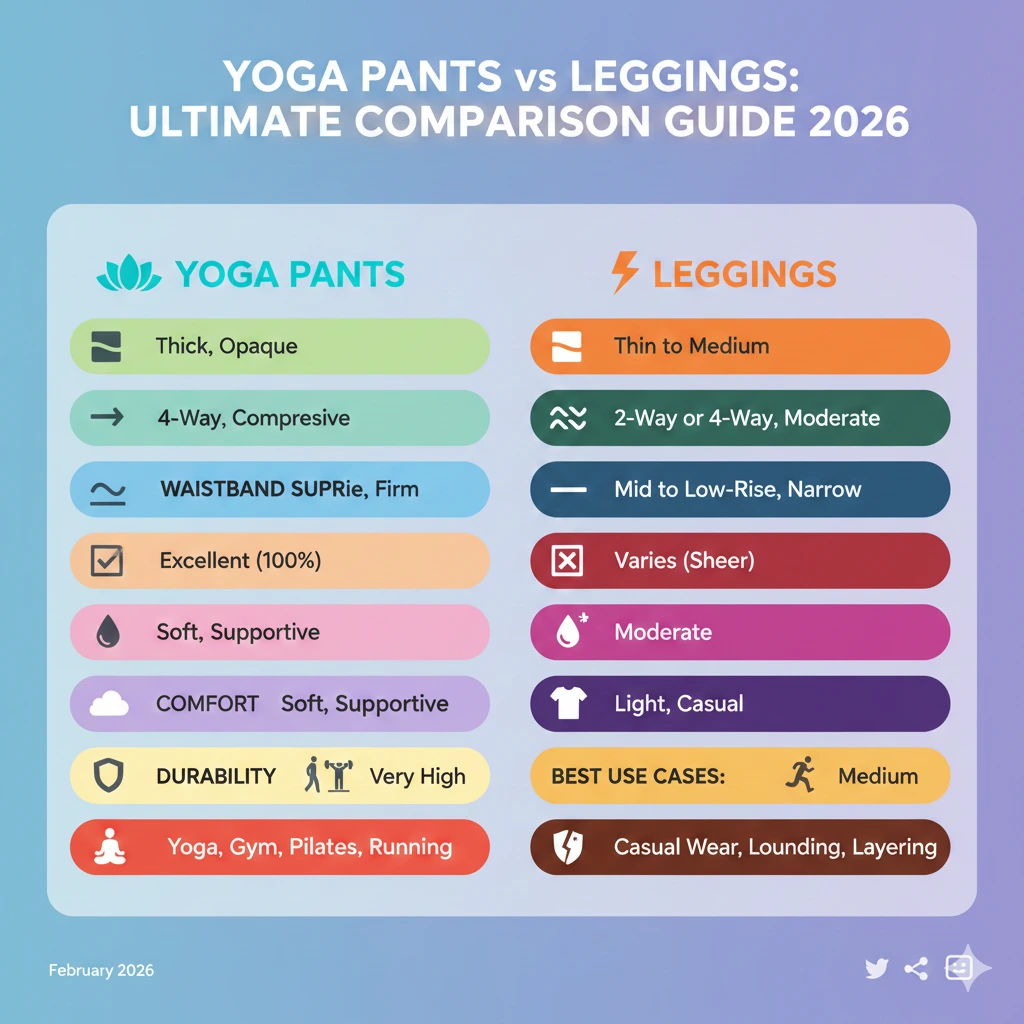
| Feature | Yoga Pants | Leggings |
| Fabric Thickness | Dense and durable | Thin to medium |
| Stretch & Flexibility | High, four-way elasticity | Moderate to high |
| Waistband | Wide, supportive, high-rise | Narrow to mid-rise |
| Squat-Proof | Usually yes | Inconsistent |
| Moisture Control | Sweat-managing design | Fabric-dependent |
| Best For | Yoga, gym, training | Casual, fashion, light movement |
| Comfort in Motion | Excellent | Moderate |
| Longevity | High | Medium |
| Price Range | Mid to premium | Budget to mid |
This table is enough to explain the fact that yoga pants vs leggings is not a better or worse argument unless the context of usage is well known.
Detailed Comparison: Yoga Pants vs Leggings
Fabric & Material Science
The only major distinction between yoga pants and leggings is the composition of their fabrics.
Yoga Pants Fabric
Yoga pants usually rely on:
- Polyester–spandex blends
- Nylon-based technical fibers
- Higher GSM (grams per square meter) density
These materials are engineered to:
- Stretch without becoming transparent
- Regulate heat and perspiration
- Resist abrasion and thinning
- Maintain the structure after washing
Leggings Fabric
Many leggings—particularly fashion styles—use:
- Cotton blends
- Low-density polyester
- Minimal compression yarns
These textiles:
- Feel soft initially
- Look flattering when standing
- Lose resilience over time
- Become sheer under tension
Conclusion: Yoga pants win over leggings in the areas of exercise, durability and repeat use.
Fit, Waistband & Comfort
The waistband determines whether a garment feels supportive—or distracting.
Yoga Pants Fit
- High-rise construction
- Wide compression panel
- Even pressure distribution
- Minimal rolling or slipping
- Enhanced core awareness
This matters during poses like:
- Downward Dog
- Forward folds
- Twists
- Balance postures
Leggings Fit
- Narrow elastic bands
- Mid- or low-rise cuts
- Pressure points at the waist
- Frequent readjustment during movement
For sustained comfort during yoga and workouts, yoga pants win clearly.
Squat-Proof Performance
One of the most searched concerns in yoga pants vs leggings is transparency.
Yoga Pants
- Designed to remain opaque
- Tested under stretch conditions
- Higher fiber density
Leggings
- Many turn see-through
- Light colors are risky
- Fashion leggings often fail squat tests
Always test leggings under bright light before workouts.
Performance for Different Activities
Yoga Practice
Best: Yoga pants
Stable waistband, coverage, and freedom of motion.
Gym & Strength Training
Best: Yoga pants or athletic compression leggings
Avoid thin lifestyle leggings.
Running
Best: Compression leggings
Yoga pants may feel loose during impact.
Casual & Athleisure Wear
Best: Leggings
Easier styling, lighter feel, everyday comfort.
Pros & Cons: Yoga Pants vs Leggings
Yoga Pants – Pros
- Excellent support
- Squat-proof construction
- Movement-focused design
- Long-lasting textiles
- Moisture Regulation
Yoga Pants – Cons
- Higher cost
- Fewer fashion options
- Slightly heavier feel
Leggings – Pros
- Stylish versatility
- Lightweight comfort
- Budget accessibility
- Easy layering
Leggings – Cons
- Inconsistent opacity
- Lower support
- Waistband rolling
- Shorter lifespan
When to Choose Yoga Pants vs Leggings
Choose Yoga Pants if:
You practice yoga or pilates
You want a high-rise waistband
You need squat-proof confidence
You sweat heavily during workouts
You value posture and stability
Choose Leggings if:
You prioritize daily comfort
You prefer fashion versatility
You’re budget-conscious
You wear them casually or layered
Brand & Price Differences
Why Yoga Pants Cost More
- Advanced textile engineering
- Ethical production standards
- Performance testing
- Reinforced seams
Leggings Price Range
- Fast-fashion budget options
- Mid-range athleisure brands
- Premium designer styles
Purchasing Advice: When purchasing, one should never be satisfied only with appearance but also with content of fabric, stretch recovery, and waistband construction.
Styling Guide: Yoga Pants vs Leggings
Yoga Pants Styling
- Sports bras or fitted tanks
- Trainers or studio shoes
- Minimal layers
Leggings Styling
- Oversized jumpers
- Hoodies and tunics
- Casual jackets
- Trainers or boots
FAQs
Yes for workouts and yoga. Yoga pants offer more support, coverage, and durability.
Yes—but only thick, athletic leggings. Thin fashion leggings may slip or become transparent.
Some are—but many aren’t. Always test opacity before workouts.
Yoga pants or compression athletic leggings are best for gym sessions.
Yoga Philosophy & Science Behind Proper Clothing
From a yogic perspective, clothing should:
- Allow energy flow
- Reduce distraction
- Support mindful awareness
From a scientific perspective, proper athletic wear:
- Minimizes friction injuries
- Improves posture feedback
- Enhances movement confidence
Yoga pants align better with both traditions.
Conclusion
There should be no debate between the yoga pants and The Leggings as to which clothes are better in all situations.
It’s about choosing the right tool for the right purpose.
If your priority is:
- Performance
- Support
- Squat-proof reliability
- Long-term durability
Choose yoga pants.
If your priority is:
- Style
- Comfort
- Casual wear
- Budget-friendly fashion
Choose leggings.
Both have a place—but understanding the difference empowers smarter choices.
