Yoga Lizard Pose
If you deal with tight hips, restricted, reduced lower-body mobility, or stiffness caused by advanced sedentary habits, then Yoga Lizard Pose can completely transform how your body moves and feels.
This pose is far more than a basic stretch. The lizard pose is a deep hip-opening asana that simultaneously enhances strength, flexibility, balance, and even emotional release.
In the modern world, many people spend hours sitting at desks, in cars, or on sofas. Over time, this lifestyle creates:
- The shortened hip flexors
- Weak glute muscles
- Poor pelvic adjustment
- Knee disquiet
- Chronic lower-back anxiety
- Reduced athletic performance
Yoga Lizard Pose direct address these dysfunctions by restoring natural movement patterns, hip mobility, and neuromuscular awareness.
Introduction
Modern life slowly erodes hip mobility.
The extended sitting shortens the iliopsoas muscle group. Irregular glutes fail to mobilize the pelvis. The lumbar spine compensates by absorbing excess load. Over time, this chain reaction leads to:
- Persistent lower-back pain
- Knee joint irritation
- Tight hamstrings and hip flexors
- Postural imbalances
- Limited progress in yoga and fitness
Yoga Lizard Pose is specifically designed to reverse these patterns.
Unlike shallow or passive stretches, Lizard Pose penetrates deep into the hip flexors, groin, and inner thigh muscles, while also requiring active muscular engagement in the legs, arms, shoulders, and core.
This balance between strength and flexibility is what makes Lizard Pose so effective.
Additionally, this posture functions as a gateway pose. When practiced consistently, it prepares the body for more demanding asanas such as:
- Pigeon Pose
- Monkey Pose
- Advanced lunges
- Arm balances
- Deep split variations
Whether you practice Vinyasa Yoga, Hatha Yoga, Power Yoga, Yin Yoga, or functional mobility training, Lizard Pose deserves a permanent position in your routine.
What Is Yoga Lizard Pose
Yoga Lizard Pose, known in Sanskrit as Utthan Pristhasana, is a deep hip-opening yoga posture commonly practiced in both dynamic flows and slow, therapeutic styles.
Sanskrit Meaning Breakdown
- Utthan = Extended, stretched out
- Pristha = Back, rear, or side of the body
- Asana = Posture or pose
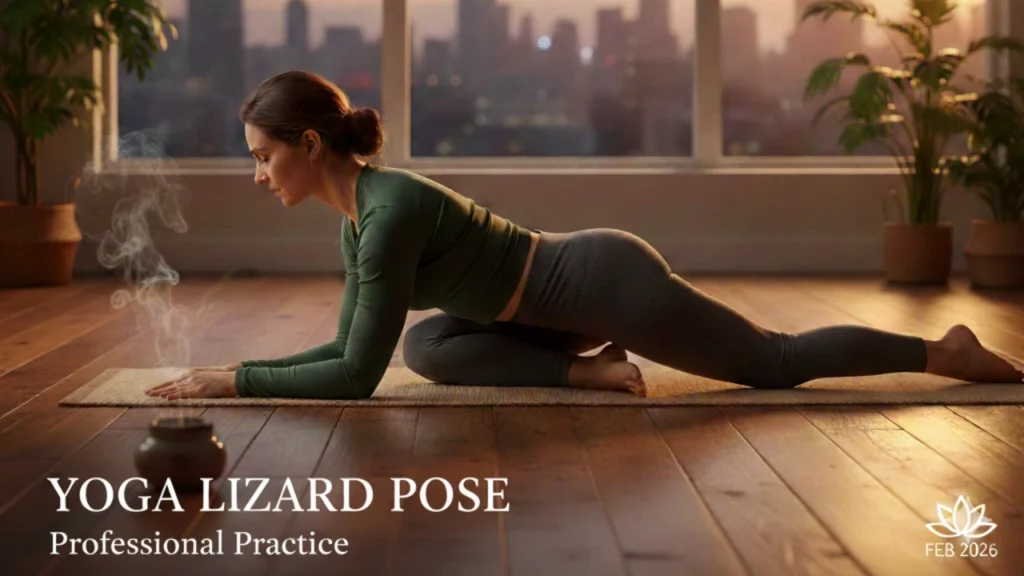
Visually, the pose resembles a lizard resting close to the ground — hips sink low, chest reaches forward, and the spine stays elongated.
Although the posture appears simple on the surface, it is intensely powerful. It integrates:
- Muscular strength
- Joint flexibility
- Balance and coordination
- Mindful breathing
- Nervous system regulation
Where Lizard Pose Fits in Yoga Practice
Yoga Lizard Pose is highly versatile and fits seamlessly into many styles of movement practice.
It is commonly used:
- After Sun Salutations
- As a preparatory pose for deep hip openers
- In Yin Yoga and slow mobility sessions
- In athletic recovery routines
- In functional hip and hamstring training
Lizard Pose works effectively as:
- A standalone stretch
- A transition posture
- A conditioning pose
Benefits of the Yoga Lizard Pose
Mental & Emotional Benefits
Many yoga traditions suggest that the hips store emotional tension, stress, and unresolved feelings. Lizard Pose allows these layers to release gradually and safely.
Mental and emotional benefits include:
- Improved present-moment awareness
- Emotional release stored in the pelvic region
- Reduced anxiety and nervous system overload
- Increased patience and psychological resilience
- Enhanced breath awareness under physical intensity
Holding Lizard Pose while maintaining calm breathing teaches the nervous system how to remain relaxed during discomfort — a skill that transfers directly into everyday life challenges.
Physical Benefits of Yoga Lizard Pose
1. Deep Hip Opening
Lizard Pose delivers an intense stretch to:
- Hip flexors (psoas and iliacus)
- Inner thighs (adductors)
- Groin muscles
This directly improves walking mechanics, squatting depth, running efficiency, and daily functional movement.
2. Improves Flexibility
With regular practice, Lizard Pose helps:
- Lengthen hamstrings and quadriceps
- Increase hip joint range of motion
- Counteract stiffness caused by prolonged sitting
3. Strengthens Supporting Muscles
Despite feeling like a stretch, Lizard Pose builds strength in:
- Core muscles for balance
- Shoulders and arms for support
- Glutes and thighs for pelvic stability
4. Enhances Posture & Alignment
- Improves pelvic positioning
- Reduces lumbar spine compensation
- Encourages spinal elongation awareness
5. Supports Circulation & Digestion
Gentle abdominal compression may:
- Stimulate digestive organs
- Improve blood circulation
- Support muscular recovery
Instructions: How to Do Yoga Lizard Pose Safely
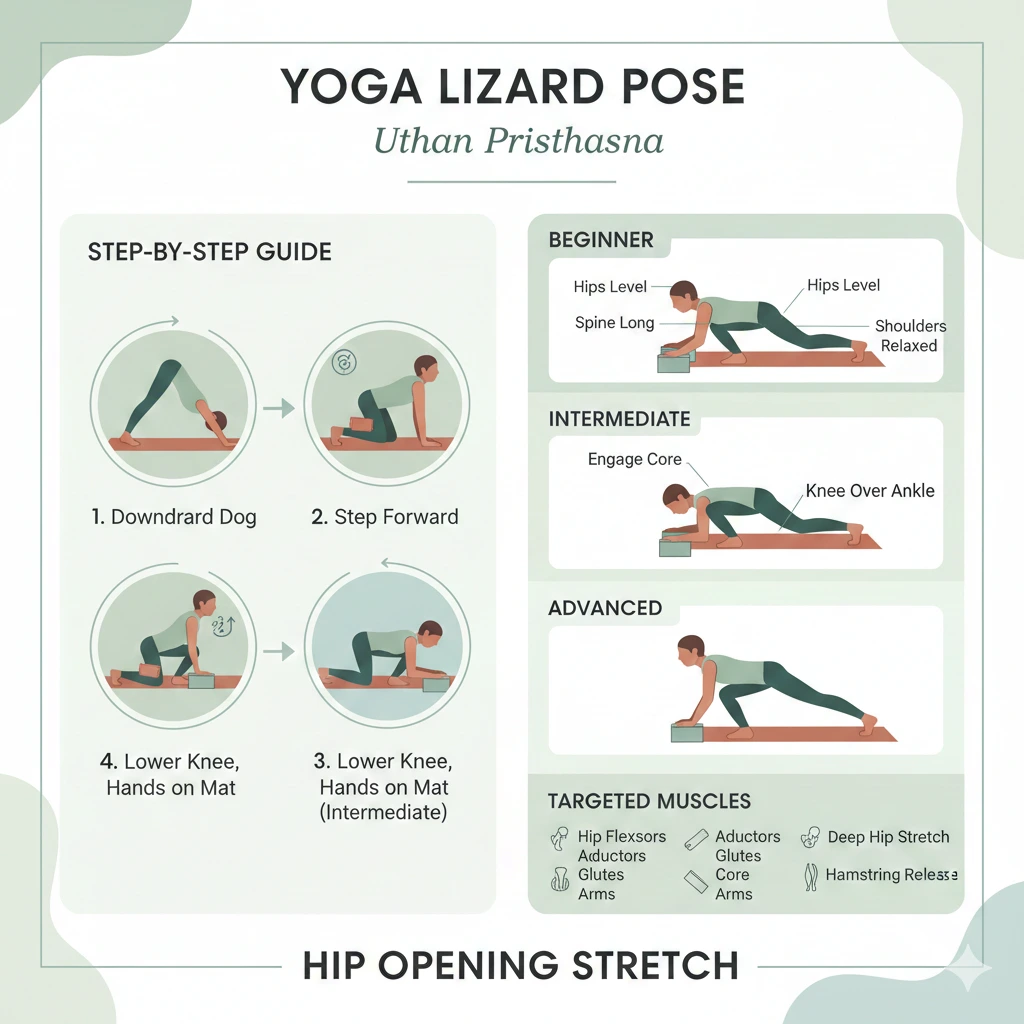
Step-by-Step Guide
1. Start in Downward Facing Dog
Hands shoulder-width apart, hips lifted, spine long.
2. Step One Foot Forward
Exhale and step your right foot to the outside of your right hand.
3. Lower the Back Knee (Optional)
Beginners may gently place the left knee on the mat.
4. Adjust Your Stance
Front knee stacks over the ankle. Toes face forward or slightly outward.
5. Choose Your Arm Position
- Hands on the mat (basic)
- Hands-on yoga blocks (supported)
- Forearms on the mat (deep stretch)
6. Lengthen the Spine
Reach the chest forward while keeping the shoulders away from the ears.
7. Breathe & Hold
Hold for 5–8 slow breaths, then switch sides.
Proper Form
| Body Part | Alignment Tip |
| Hips | Stay level, avoid collapsing |
| Front Knee | Tracks over toes |
| Spine | Long and neutral |
| Shoulders | Relaxed and stable |
| Core | Light engagement |
Breathing Technique in Lizard Pose
- Inhale: Lengthen the spine
- Exhale: Allow hips to soften gradually
Recommended breathing styles:
- Ujjayi breathing for focus
- Slow nasal breathing for relaxation
Never hold your breath.
Muscles Targeted in Yoga Lizard Pose
Primary Muscles
- Hip flexors (psoas)
- Adductors (inner thighs)
- Hamstrings
Secondary Muscles
- Gluteal muscles
- Quadriceps
- Core Stabilizers
- Shoulders and arms
Yoga Lizard Pose Variations
Beginner Variations
- Yoga blocks under the hands
- Back knee resting on mat
- Shortened stance
Intermediate Variations
- Forearms on the mat
- Back knee lifted
- Gentle hip rocking
Advanced Variations
- Flying Lizard Pose
- Quad stretch variation
- Transition into Hanumanasana
Common Mistakes to Avoid
Forcing the hips
Allow gravity to assist
Collapsing the shoulders
Press the floor away
Holding the breath
Maintain steady breathing
Knee drifting inward
Activate glutes
Safety Tips for Lizard Pose
- Always warm up first
- Use yoga props freely
- Stop if sharp pain occurs
- Progress gradually
Contraindications
Avoid or consult a professional if you have:
- Hip labral tears
- Severe knee injuries
- Recent lower-back surgery
- Wrist or shoulder pain
- Pregnancy (unless supervised)
Tips for Beginners
- Practice after warm-ups
- Focus on breath rather than depth
- Use blocks and blankets
- Hold for shorter durations
Duration & Frequency Recommendations
| Level | Hold Time | Frequency |
| Beginner | 3–5 breaths | 3–4×/week |
| Intermediate | 5–8 breaths | 4–5×/week |
| Advanced | 8–12 breaths | As needed |
Yoga Philosophy & Science Behind Lizard Pose
Yogic View
Lizard Pose activates the Svadhisthana (sacral chakra) — associated with emotions, creativity, adaptability, and fluid movement.
Scientific View
- Improves hip mobility
- Reduces muscular tension
- Enhances neuromuscular coordination
Optional Diet Tips for Hip Mobility
- Stay well hydrated
- Eat magnesium-rich foods
- Reduce inflammatory foods
- Consume sufficient protein
Home Yoga Flow Including Lizard Pose
Simple Hip-Opening Sequence:
- Cat–Cow
- Low Lunge
- Lizard Pose
- Pigeon Pose
- Seated Forward Fold
- Savasana
FAQs
Yes, with modifications like blocks and a lowered back knee.
5–8 slow breaths per side.
Yes, when practiced correctly and gently.
Yes, if you avoid forcing.
Conclusion: Is Yoga Lizard Pose Worth Practicing?
Yoga Lizard Pose (Utthan Pristhasana) is one of the most effective hip-opening yoga postures available. When practiced with patience, breath awareness, and proper alignment, it develops mobility, strength, emotional balance, and deep body awareness
