Introduction
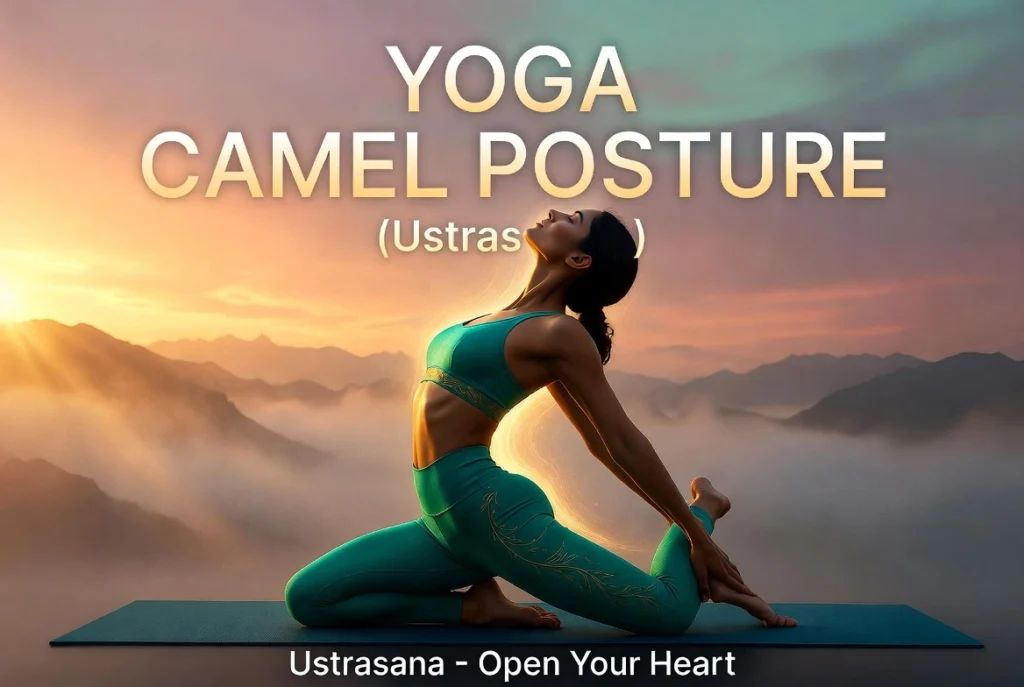
Yoga Camel Posture, called Ustrasana in Sanskrit, is a graceful back-bending yoga posture celebrated for its ability to open the chest, expand the heart space, assemble the spine, and stretch the entire front body. It is widely known as a heart-opening asana because it inspires extension in areas where daily life often creates narrowing and closeness.
In modern lifestyles, we spend prolonged hours sitting on:
- Office chairs
- Car seats
- Couches
- Smartphones
- Laptops
This prolonged sitting pattern creates:
- Rounded shoulders
- Contracted hips
- Stiff upper back
- Weak gluteal muscles
- Shallow breathing
Camel Pose directly addresses these issues by stretching the hip flexors, broadening the chest, expanding the rib cage, and strengthening the muscles of the posterior chain.
When performed with intelligence and proper alignment, it feels:
- Therapeutic
- Liberating
- Uplifting
- Emotionally cleansing
- Physically relieving
However, when rushed, forced, or practiced nervously, it may cause discomfort. Beginners sometimes crash into the lower back, drop their head suddenly, or overstretch their neck. Learning correct technique transforms this asana from a risky region into a deeply healing and restorative posture.
In this full guide, you will explore:
- Step-by-step execution
- Fetailed alignment & posture optimization
- Anatomy-based explanations
- Benefits & physiological responses
- Mindful breathing integration
- Variations for beginners & advanced yogis
- Classical & modern yoga philosophy
- Frequently asked questions
- Contraindications & medical precautions
- EEAT-friendly references & context
Let us now explore Camel Pose in a safe, mindful, and approved way.
What Is the Yoga Camel Posture?
Camel Pose is a kneeling yoga backbend where the chest rises upward, the front body opens, and the spine curves, featuring the rounded hump of a camel. It is generally practiced in Hatha Yoga, Ashtanga Yoga, Vinyasa Flow, Power Yoga, and curative yoga sequences.
Sanskrit Meaning
- Ustra = Camel
- Asana = Posture or Pose
Level Classification
It is considered:
- A mild to deep backbend
- An intermediate-level posture
- A preparatory asana for advanced backbends, such as:
- Wheel Pose (Chakrasana)
- King Pigeon Pose (Eka Pada Rajakapotasana)
- Bow Pose (Dhanurasana)
This asana trains:
- Spinal extension
- Hip opening
- Shoulder mobility
- Emotional flexibility
- Breath extension
Benefits of Camel Pose
Camel Pose offers an extensive spectrum of physical, psychological, emotional, and energetic advantages.
Physical Benefits of Yoga Camel Posture
Practicing Ustrasana may help:
- Open the chest, rib cage, and shoulders
- Increase lung space and respiratory capacity
- Improve spinal resilience and mobility
- Strengthen the leech-like muscles
- Expand the abdominal region and the diaphragm area
- Region hip flexors and quadriceps
- Counteract the effects of prolonged sitting
- Enhance posture alignment awareness
- Invigorate circulation and blood flow
- Activate back, glute, and leg pect
It is particularly beneficial for:
- Office workers
- Long-distance drivers
- Students
- Desk-bound professionals
- Sports need a hip-flexor region
It can also promote:
- Deeper breathing
- Better rib cage extension
- Improvement in thoracic extension
Mental & Emotional Benefits
Because Ustrasana is a heart-opening pose, many individuals report emotional release during or after practice.
Possible emotional responses include:
- Tears
- Laughter
- Yawning
- Sighing
- Feeling lighter or relieved
These responses reflect energetic release rather than injury when practiced properly.
Mental and emotional benefits may include:
- Stress reduction → tension alleviation
- Improvement in mood & emotional clarity
- Increase in confidence and inner strength
- Decreased feeling of constriction
- Sensation of openness and personal liberation
The pose is often used in mind-body therapy, actual practices, and emotional healing yoga flows.
Energetic & Yogic Benefits
According to the yogic attitude, Ustrasana stimulates:
- Anahata Chakra (Heart Chakra)
- Emotional distillation
- Compassion & empathy
- Forgiveness & acceptance
- Mental harmony
- Pranic energy movement
It helps to tension the mind-body-breath continuum.
Muscles Targeted in Camel Pose
The camel pose simultaneously stretches and Strengthens multiple muscle groups.
Stretched Muscles
- Quadriceps
- Hip flexors (psoas, iliacus)
- Abdominal muscles
- Sternocleidomastoid & throat region
- Intercostal muscles
- Pectoral muscles
- Anterior deltoids
Strengthened Muscles
- Erector spinae
- Multifidus
- Gluteus maximus
- Hamstrings (isometric engagement)
- Scapular stabilizers
- Core stabilizing muscles
This unique combination makes it deeply therapeutic yet strongly activating.
How to Do the Yoga Camel Posture
Follow these project mindfully for safety and efficiency.
Instructions
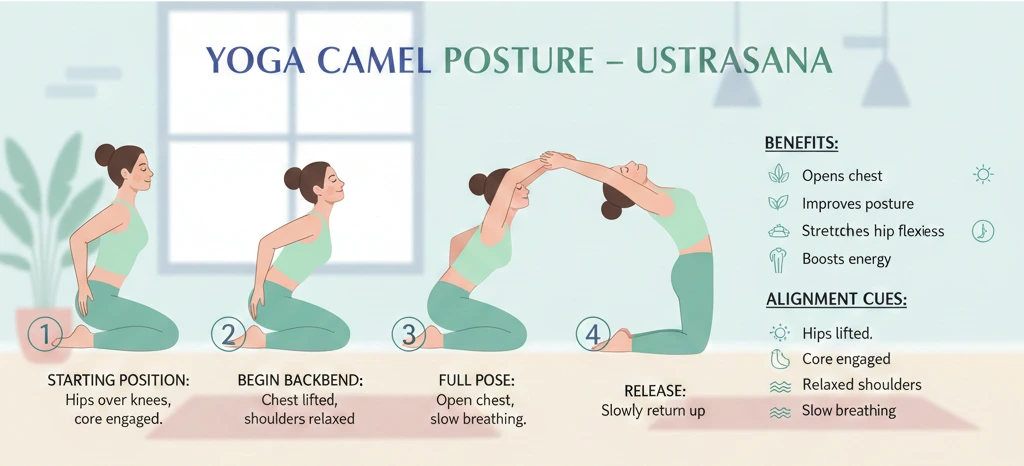
- Kneel on your yoga mat with knees hip-width apart.
- Place your palms on your hips or lower back.
- Lengthen the spine upward before bending backward.
- Engage the core gently to support the lumbar area.
- Lift the chest toward the ceiling.
- Slowly lean back without pushing your hips forward.
- Bring hands to heels or keep hands on sacrum.
- Relax your shoulders away from your ears.
- Maintain slow nasal breathing.
- Hold the pose for 10–30 seconds.
- To release, tuck the chin, engage the abdomen, and return upright.
Alignment & Proper Form Tips
Sequence principles help you protect the spine and neck.
- Thighs remain vertical
- Hips stay stacked above knees
- Chest lifts before bending backward
- Shoulders soften and draw back
- Neck stays comfortable and supported
- Glutes and core engage without force
Adjustment Visualization Cue
Think:
“Lift upward first — then arc backward second.”
This imagery helps prevent lower back compression.
Breathing Technique in Camel Pose
Breathing transforms the posture from simple stretching to nervous-system control.
- Inhale → broaden the chest
- Hold → maintain slow rhythmic breaths
- Exhale → rise gently back up
Never hold your breath or strain.
Variations of Camel Pose
Beginner Variations
- Hands on the sacrum instead of the heels
- Tuck toes under to raise heels
- Use yoga blocks beside the feet
- Half Camel Pose (Ardha Ustrasana)
- Support back against the wall
Intermediate Variations
- Catch heels with both hands
- Deeper thoracic backbend
- Lift the sternum higher
Advanced Variations
- Full head drop
- Advanced grip variations
- Kapotasana preparatory movements
Always prioritize safety and avoid forcing flexibility.
Common Mistakes to Avoid in Camel Pose
| Mistake | Why Risky | Fix |
| Hips pushing forward | lumbar strain | stack hips above knees |
| Overarching low back | compression | lengthen spine first |
| Head thrown back | neck stress | neutral neck or supported drop |
| Collapsed chest | shallow breathing | broaden rib cage |
| No core engagement | instability | activate abdomen |
| Cold practice | injury risk | Warm up first |
Quick Cue Reminders
“Chest up — tailbone down.”
“Strong legs — relaxed shoulders.”
“Even extension through the whole spine.”
Safety Tips for Yoga Camel Posture
- Warm up the spine first
- Avoid jerky movement
- Use props without hesitation
- Exit the pose slowly
- Stop instantly if sharp pain occurs
- keep awareness of breath
- Consult a therapist when needed
Contraindications
Seek medical guidance if experiencing:
- Severe lumbar pain
- Disc herniation
- Recent abdominal/spinal surgery
- Uncontrolled hypertension
- Migraine triggered by backbends
- Acute knee pain
- Hernia
- Cervical injuries
- Advanced spondylolisthesis
Pregnancy
Avoid intense deep backbends in later Pregnancy; choose supported, gentle variations only.
Tips for Beginners
- Begin with Half Camel
- Keep toes tucked
- Shorten holding duration
- Lift the chest before bending
- Use props confidently
- Perform counterposes afterward
Good Counterposes Yoga Camel Posture
- Child’s Pose
- Seated Forward Fold
- Gentle Supine Twist
How Long to Hold Camel Pose
Beginners: 10–20 seconds
Intermediate: 30–45 seconds
Advanced: 60–90 seconds
Frequency:
- 2–3 times weekly
- Always warm up before practicing
- Avoid during acute back pain episodes
Place Camel Pose in a Yoga Sequence
Best placement:
- After body warm-up
- After hip-opening postures
- Before cooling or restorative poses
Avoid performing immediately at the start of practice.
Science & Yoga Philosophy Behind Camel Pose
Yogic Perspective
- Camel Pose is said to:
- Awaken Anahata Chakra
- Dissolve emotional residue
- Encourage inner serenity
- Enhance compassion
- Activate spiritual awareness
Anatomical & Physiological Perspective
Scientifically, Ustrasana:
- Improves thoracic spinal extension
- Expands rib cage & inhaling muscles
- Stimulates vagus nerve response
- Supports parasympathetic activity
- Reduces accumulated muscular tension
It bridges the world of somatic therapy, breathwork, cuation, and biomechanics.
Home Yoga Sequence Including Camel Pose
A gentle home flow:
- Cat–Cow
- Low Lunge
- Sphinx Pose
- Bridge Pose
- Camel Pose
- Child’s Pose
No equipment needed beyond a yoga mat.
Diet Tips Supporting Backbends
- Hydrate sufficiently
- Consume magnesium-rich foods
- Avoid heavy meals pre-practice
- Eat anti-incendiary nutrition (greens, turmeric, ginger)
FAQs Yoga Camel Posture
Yes, when practiced gradually with proper alignment and modifications.
Heart-opening backbends may discharge stored emotional energy. This is normal and harmless when safe alignment is followed.
No single yoga pose directly removes intermuscular fat. Overall lifestyle, food patterns, and exercise influence body fat.
Start with 10–20 seconds and successively increase with comfort.
Pros & Cons Yoga Camel Posture
Pros
- Improves posture
- Increases flexibility
- Strengthens back muscles
- Opens hips and front body
- Enhances energy levels
- Encourages emotional release
Cons
- Neck discomfort
- Dizziness
- Lumbar compression
- Correct alignment and mindful practice minimize these risks.
Conclusion
The Camel Posture (Ustrasana) is not simply a striking backbend — it is a holistic yogic practice that influences body, breath, nervous system, and emotions together. It:
- Strengthens the back
- Stretches the entire anterior body chain
- Broadens the heart center
- Improves energetic flow
- Enhances posture awareness
